Three Channel Grain Color Sorter Machine for Seeds, Pulses, Nuts and Agricultural Products
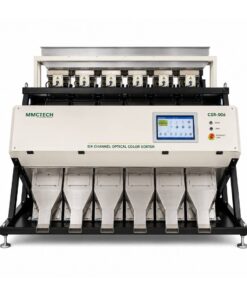
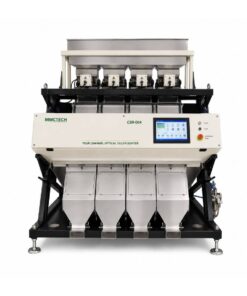
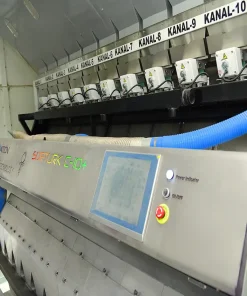
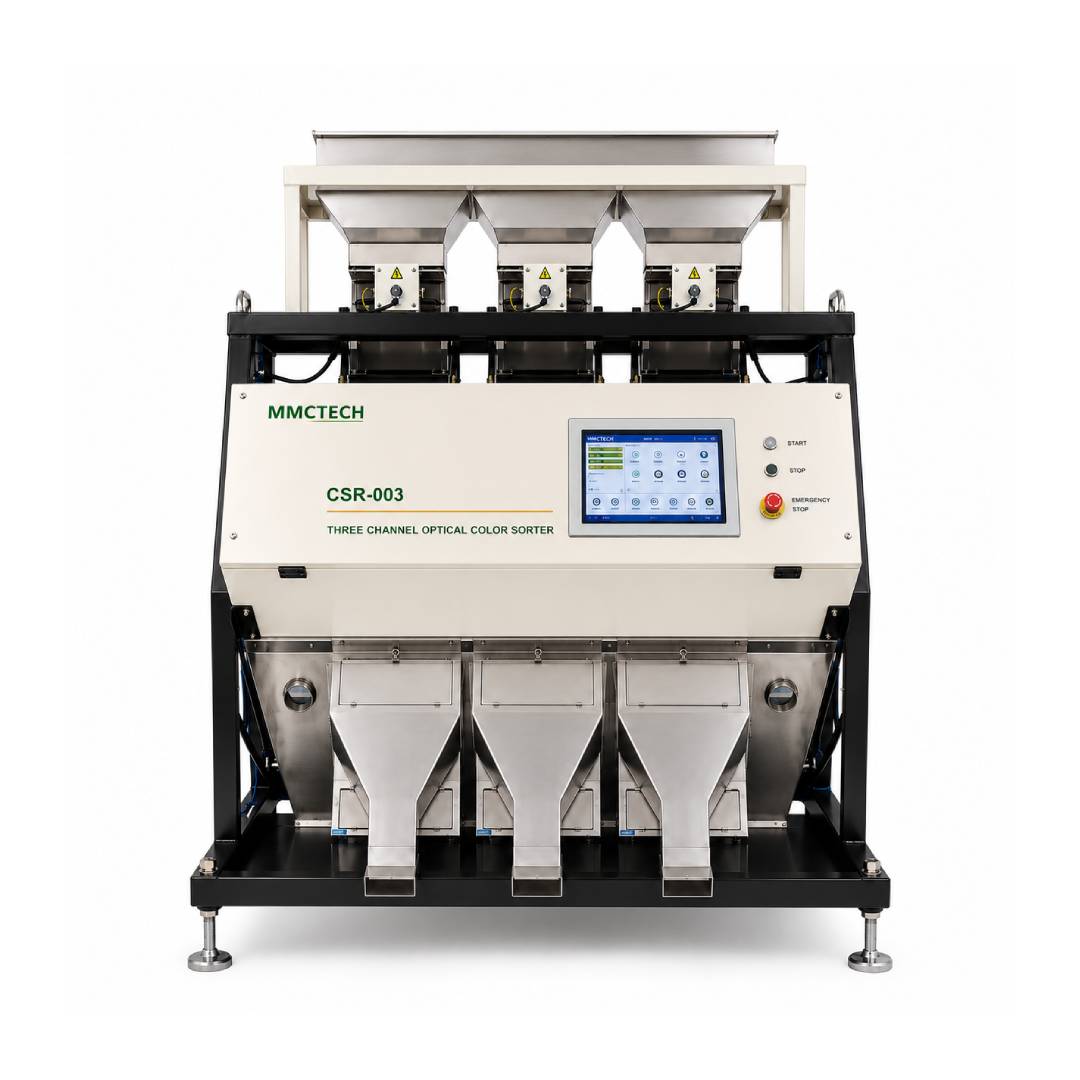
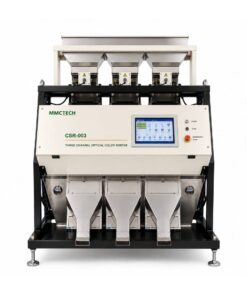
The MMCTECH CSR-003 Three Channel Grain Color Sorter is a commercial optical sorting machine manufactured for seed processing plants, grain cleaning facilities, pulse processors, oilseed operations, nut processing companies, food ingredient manufacturers, specialty crop processors, and automated agricultural production lines. Equipped with three optical sorting channels, a CCD color camera system, and 189 high-speed pneumatic ejectors, the CSR-003 detects and removes discolored, defective, damaged, foreign, and visually inconsistent particles from properly cleaned, dry, and free-flowing products.
Designed for businesses searching for a grain color sorter, seed color sorter machine, grain color sorter for sale, industrial color sorter, or three-channel optical sorting system, the CSR-003 provides greater processing capacity than the CSR-001 and CSR-002 while maintaining controlled product presentation and precise pneumatic rejection.
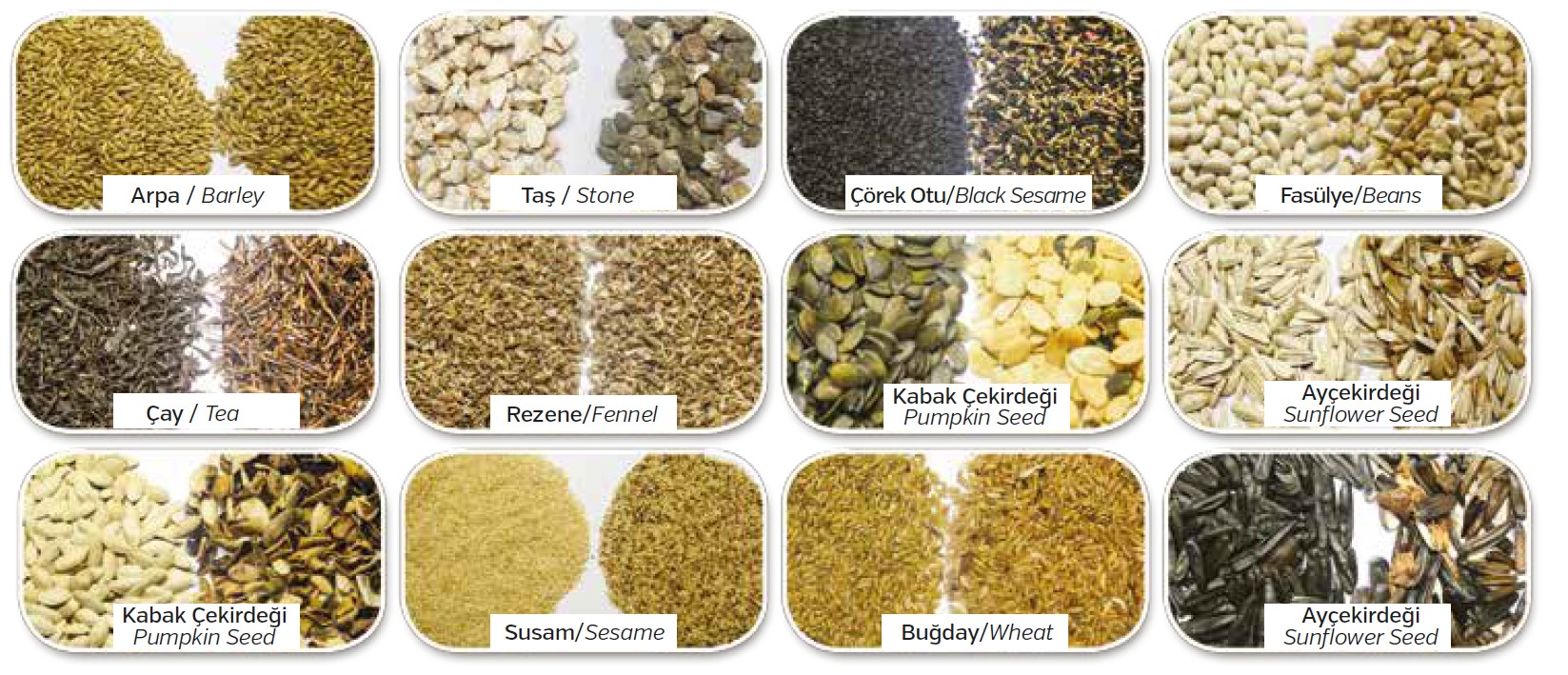
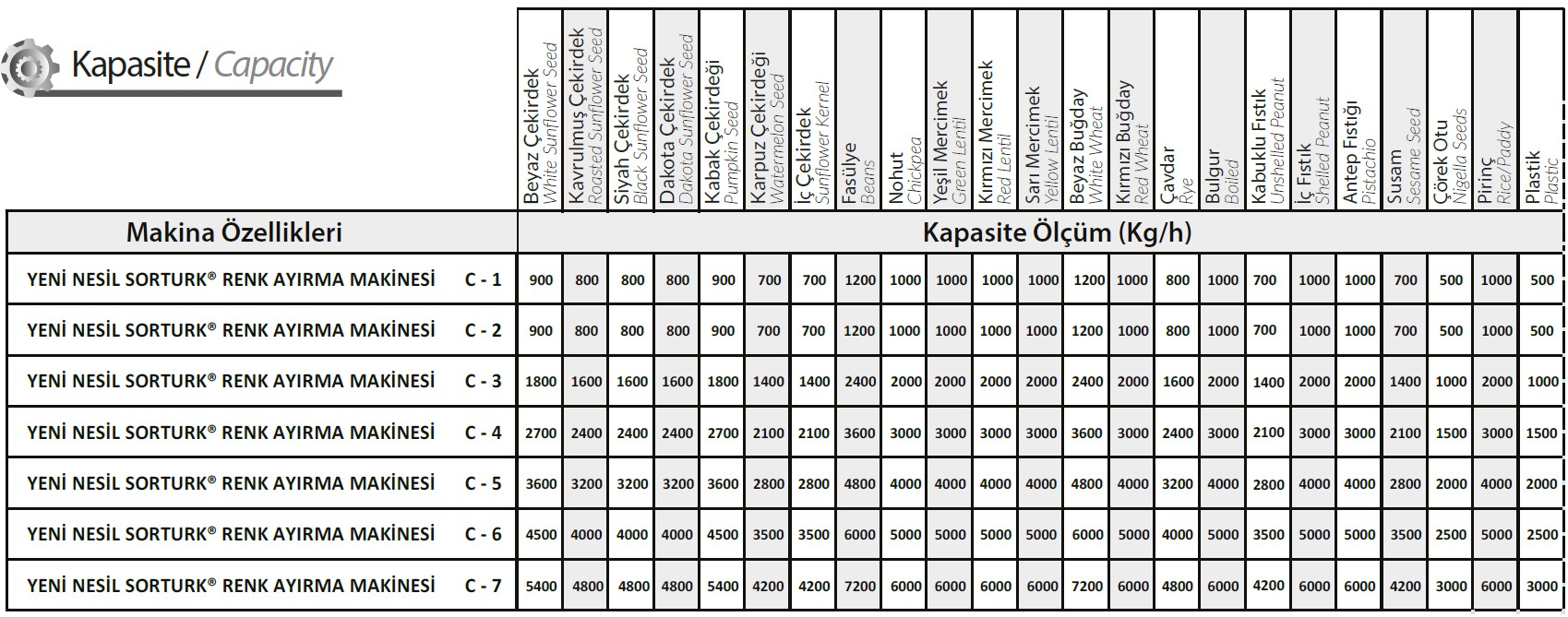
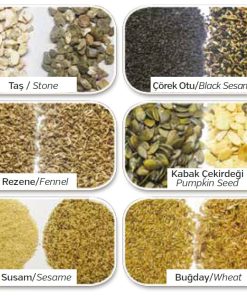
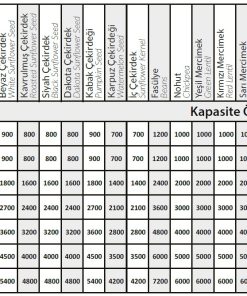
According to the published CSR series capacity reference, the CSR-003 provides nominal capacities from approximately 2,205 to 5,291 lbs/hour (1,000 to 2,400 kg/hour), depending on the product. It can be configured for white sunflower seed, roasted sunflower seed, black sunflower seed, Dakota sunflower seed, pumpkin seed, watermelon seed, sunflower kernels, beans, chickpeas, green lentils, red lentils, yellow lentils, white wheat, red wheat, rye, bulgur, unshelled peanuts, shelled peanuts, pistachios, sesame seed, black seed or nigella, rice paddy, and suitable plastic granules.
Commercial Three Channel Optical Sorting System
The CSR-003 uses three product channels to distribute material across a larger optical inspection area than one-channel and two-channel models. This triple-channel configuration supports higher commercial throughput while preserving the product separation needed for individual camera inspection and accurate ejector response.
The CSR-003 is suitable for:
- Commercial seed processing plants
- Medium-capacity grain cleaning facilities
- Pulse and legume processing lines
- Sunflower and edible seed plants
- Peanut and pistachio processing operations
- Specialty crop cleaning facilities
- Food ingredient production lines
- Contract seed cleaning companies
- Automated grain sorting systems
- Final quality-control installations before packaging
The machine can be supplied as standalone color sorting equipment or integrated into an MMCTECH turnkey seed and grain processing plant with elevators, feeders, platforms, compressed-air systems, conveyors, magnetic separators, gravity tables, and bagging equipment.
How Does the CSR-003 Three Channel Color Sorter Work?
The cleaned product enters a controlled feeding system and is distributed across three optical sorting channels. As the product travels through the inspection zone, CCD color cameras analyze visible characteristics such as color, shade, surface appearance, and contrast.
The machine compares each visible particle with the acceptable product settings selected for the crop. When a defective particle is identified, the control system activates the corresponding pneumatic ejector. A short, precisely timed pulse of compressed air redirects the unwanted material into the reject outlet while acceptable product continues into the primary product discharge.
The sorting process includes:
- Controlled product feeding
- Distribution across three sorting channels
- CCD color camera inspection
- Real-time color and appearance analysis
- Accept-or-reject decision
- High-speed pneumatic ejection
- Separate accepted, rejected, and bouncing-product discharge
CCD Color Camera Technology
The standard CSR-003 configuration uses CCD color camera technology to identify visible differences between acceptable product and unwanted material. Depending on the product and selected sorting recipe, the machine may remove:
- Discolored seeds and grains
- Dark or light defective kernels
- Stained agricultural products
- Visibly damaged material
- Burned or heat-discolored particles
- Mold-discolored products
- Immature material with visible differences
- Shell fragments
- Foreign seeds with contrasting color
- Foreign material with a different appearance
- Products outside the selected color range
The CSR-003 sorts according to visible characteristics. It does not replace equipment that separates material according to size, shape, length, density, magnetic response, or internal composition.
Optional NIR Camera Configuration
An optional NIR camera configuration may be evaluated when visible CCD color inspection alone cannot distinguish the accepted product from the target defect. Near-infrared detection may help identify certain differences in material response that are not obvious in the visible spectrum.
NIR performance is product-specific. Sample testing is recommended before selecting this option because not every crop, contaminant, or defect produces sufficient near-infrared contrast.
Grain Color Sorter for Wheat, Rye and Bulgur
The CSR-003 can be used as a commercial grain color sorter for suitable wheat, rye, bulgur, and other free-flowing grain products. Published nominal capacities include:
- White wheat: approximately 5,291 lbs/hour (2,400 kg/hour)
- Red wheat: approximately 4,409 lbs/hour (2,000 kg/hour)
- Rye: approximately 3,527 lbs/hour (1,600 kg/hour)
- Bulgur: approximately 4,409 lbs/hour (2,000 kg/hour)
The machine may help remove dark kernels, stained grains, visibly damaged product, contrasting foreign seeds, and other color-related defects. The product should be mechanically cleaned before entering the optical sorter to remove excessive dust, chaff, stones, broken material, oversize impurities, and undersize particles.
Wheat Color Sorter Machine
The CSR-003 is particularly suitable for processors searching for a wheat color sorter machine with greater throughput than a mini or two-channel model. White and red wheat require separate optical recipes because their acceptable color ranges and defect contrasts differ.
A complete wheat processing sequence may include pre-cleaning, screen cleaning, aspiration, stone removal, gravity separation, magnetic separation, optical color sorting, final inspection, and bagging. Each machine removes a different category of impurity.
Sunflower Seed Color Sorter
The CSR-003 supports several sunflower products with the following nominal capacities:
- White sunflower seed: approximately 3,968 lbs/hour (1,800 kg/hour)
- Roasted sunflower seed: approximately 3,527 lbs/hour (1,600 kg/hour)
- Black sunflower seed: approximately 3,527 lbs/hour (1,600 kg/hour)
- Dakota sunflower seed: approximately 3,527 lbs/hour (1,600 kg/hour)
- Sunflower kernels: approximately 3,086 lbs/hour (1,400 kg/hour)
The machine may help remove discolored, stained, burned, visibly damaged, light-colored, dark-colored, and foreign particles when sufficient optical contrast exists. Raw seed, roasted seed, striped seed, black seed, and kernels should each use separately adjusted sorting recipes.
How Can Advanced Sorting Improve Sunflower Kernel Purity?
High-purity sunflower kernel production normally requires more than one machine. Screen cleaning removes size-related impurities. Aspiration removes lightweight material. Destoners remove dense mineral contamination. Gravity separators classify by density. Magnetic separators remove ferrous contamination. The CSR-003 then removes visible color defects and foreign material that remain after mechanical cleaning.
Final purity depends on incoming product quality, defect contrast, feeding consistency, machine settings, acceptable product recovery, and whether one or multiple optical sorting passes are used. No single color sorter should be represented as guaranteeing a fixed purity percentage for every product.
Pumpkin and Watermelon Seed Color Sorting
The published nominal CSR-003 capacity for pumpkin seed is approximately 3,968 lbs/hour (1,800 kg/hour). The nominal watermelon seed capacity is approximately 3,086 lbs/hour (1,400 kg/hour).
Pumpkin and watermelon seed varieties can differ in color, size, thickness, reflectivity, and surface pattern. Uniform product feeding is important because overlapping particles can reduce individual optical visibility and make accurate pneumatic rejection more difficult.
Bean and Chickpea Color Sorter Machine
The CSR-003 provides strong commercial capacity for beans and chickpeas:
- Beans: approximately 5,291 lbs/hour (2,400 kg/hour)
- Chickpeas: approximately 4,409 lbs/hour (2,000 kg/hour)
A bean or chickpea color sorter can help remove visibly discolored, stained, darkened, light-colored, damaged, mold-discolored, or foreign particles. Density-related defects that visually resemble acceptable product may require a gravity separator before the optical sorter.
Pulses Color Sorter for Green, Red and Yellow Lentils
The CSR-003 can be configured as a commercial pulses color sorter. Published nominal capacity for green, red, and yellow lentils is approximately 4,409 lbs/hour (2,000 kg/hour) for each product.
Each lentil variety requires a separate sorting recipe because the acceptable base color, defect color, background contrast, and rejection sensitivity are different. The machine should be cleaned and the correct product settings confirmed during every changeover.
Peanut, Pistachio and Nut Color Sorter
The CSR-003 can be evaluated for suitable peanut and pistachio processing applications. Published nominal capacities are:
- Unshelled peanuts: approximately 3,086 lbs/hour (1,400 kg/hour)
- Shelled peanuts: approximately 4,409 lbs/hour (2,000 kg/hour)
- Pistachios: approximately 4,409 lbs/hour (2,000 kg/hour)
Nut products may contain natural variations in color, surface texture, shape, and reflectivity. Product testing helps determine suitable lighting, camera sensitivity, background, feeding rate, and reject settings.
Optical sorting supports visual quality control but does not replace laboratory testing, aflatoxin management, food-safety inspection, or other required quality systems.
Walnut and Other Nut Applications
The CSR-003 may also be evaluated for walnuts and other suitable nut products when their size, flow characteristics, surface presentation, and defect contrast are compatible with the machine. Capacity should not be assumed from the peanut or pistachio data. Product testing is required for crops not included in the published capacity reference.
Sesame and Nigella Seed Color Sorter
The CSR-003 has a published nominal sesame seed capacity of approximately 3,086 lbs/hour (1,400 kg/hour). The nominal black seed or nigella capacity is approximately 2,205 lbs/hour (1,000 kg/hour).
Small seeds require stable feeding, clean optical windows, controlled product separation, and precise ejector timing. Their lower nominal capacity compared with larger beans or wheat reflects the need to present individual particles clearly to the camera system.
Rice Paddy Optical Grain Sorter
The published nominal rice paddy capacity is approximately 4,409 lbs/hour (2,000 kg/hour). The CSR-003 may help remove visibly discolored grains and contrasting foreign particles after the rice paddy has been properly cleaned.
Dust, straw, stones, broken material, and heavy foreign contamination should be removed before optical sorting. Cleaner incoming material improves camera visibility, reduces ejector activity, supports better acceptable-product recovery, and lowers unnecessary air consumption.
Corn and Soybean Color Sorter Applications
The CSR-003 may be evaluated for corn and soybean color sorting when product samples, defect characteristics, required throughput, and feeding behavior are reviewed. These products are not assigned a specific nominal capacity in the supplied CSR-003 capacity reference, so final performance should be confirmed through application analysis or product testing.
For corn, the machine may help remove visibly darkened, burned, mold-discolored, damaged, or foreign kernels. For soybeans, it may remove visibly stained, discolored, damaged, or contrasting particles.
Plastic Granule Color Sorting
The CSR-003 may be evaluated for suitable plastic granules at a nominal published capacity of approximately 2,205 lbs/hour (1,000 kg/hour). The machine can separate plastic particles according to visible color differences when the product flows consistently through the optical channels.
Plastic applications require separate evaluation because static electricity, transparency, reflectivity, irregular particle shape, and temperature can affect product feeding and camera detection.
189 High-Speed Pneumatic Ejectors
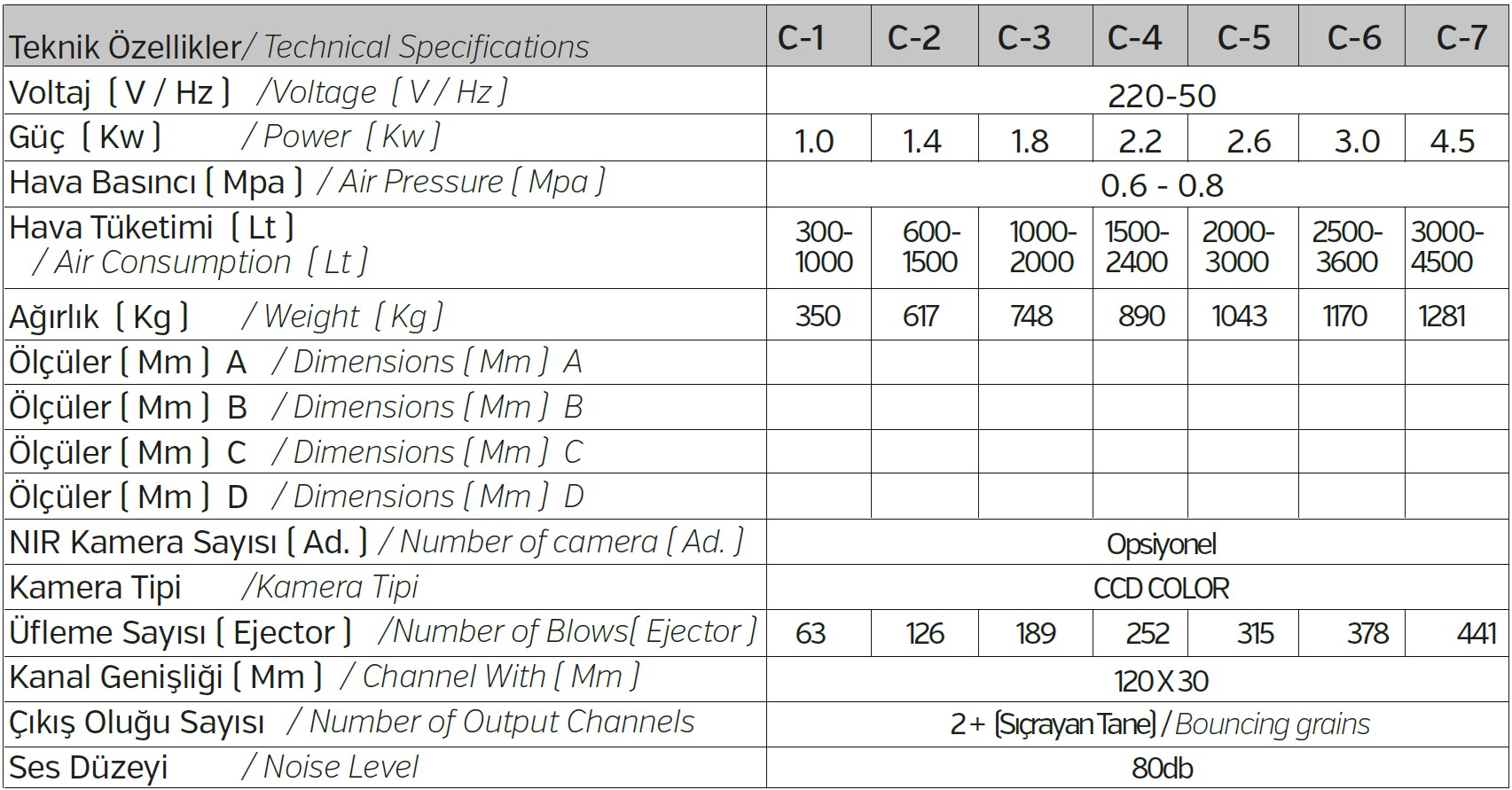
The CSR-003 is equipped with 189 pneumatic ejectors. These ejectors receive signals from the optical control system and create short air pulses that redirect unwanted particles away from the accepted product stream.
Ejector performance depends on:
- Stable compressed-air pressure
- Clean and dry compressed air
- Correct ejector timing
- Product speed
- Particle size
- Channel loading
- Defect percentage
- Sorting sensitivity
- Routine inspection and maintenance
Increasing sorting sensitivity may remove more defects, but it can also increase acceptable product loss and compressed-air consumption. The correct settings should balance purity, recovery, capacity, and operating cost.
Compressed-Air Requirements
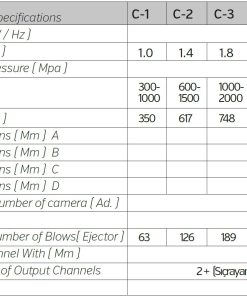
The CSR-003 requires a nominal operating air pressure of approximately 87–116 psi (0.6–0.8 MPa / 6–8 bar). Published nominal air consumption is approximately 35.3–70.6 CFM (1,000–2,000 L/min).
Actual air consumption depends on product type, reject percentage, processing rate, sensitivity, ejector activity, and selected recipe. The compressor and air-treatment package should be sized for maximum expected demand with sufficient reserve capacity.
The compressed-air system should include:
- Correctly sized compressor
- Air receiver tank
- Moisture separator
- Compressed-air dryer
- Oil filtration
- Particle filtration
- Pressure regulator
- Pressure monitoring
- Properly sized air lines
- Minimal pressure drop
Why Optical Grain Sorter Pre-Cleaning Matters
The CSR-003 should generally receive product that has already passed through suitable mechanical cleaning stages. Excessive dust, chaff, stones, broken material, oversize particles, undersize particles, and lightweight impurities increase the workload on the camera and ejector system.
A typical processing flow may include:
- Seed or grain pre-cleaner
- Fine screen cleaner
- Aspiration system
- Destoner
- Gravity separator
- Indented cylinder separator when required
- Magnetic separator
- CSR-003 three-channel optical color sorter
- Final inspection
- Weighing, bagging, or storage
Correct pre-cleaning can improve optical visibility, reduce contamination on camera windows, decrease reject load, lower compressed-air consumption, improve acceptable-product recovery, and support consistent sorting performance.
Color Sorter Versus Grain Cleaner
A grain cleaner separates material according to screen size, airflow, shape, or mechanical properties. A color sorter separates according to visible appearance. The CSR-003 is normally installed after grain cleaning rather than used as a replacement for screen and aspiration equipment.
Color Sorter Versus Gravity Separator
A gravity separator removes particles according to density or specific gravity. It can separate lightweight, hollow, immature, insect-damaged, or low-density material even when those particles have the same color as acceptable product.
The CSR-003 removes visually different particles. Combining gravity separation and optical color sorting usually provides more complete defect removal than relying on either technology alone.
Color Sorter Versus Magnetic Separator
A magnetic separator captures ferromagnetic and sufficiently responsive magnetic contamination. An optical sorter detects visible differences. Dedicated magnetic separation or metal-detection equipment should be used for metal-control applications.
Is the CSR-003 the Best Color Sorter Machine for a Medium-Capacity Plant?
The best color sorter machine should be selected according to product type, hourly capacity, defect characteristics, required purity, acceptable recovery, compressor availability, electrical service, installation space, and future expansion plans.
The CSR-003 may be the most suitable model when the processor needs:
- Three optical sorting channels
- 189 pneumatic ejectors
- Commercial mid-range capacity
- CCD color camera inspection
- Optional NIR evaluation
- Multiple crop capability
- Higher throughput than CSR-001 and CSR-002
- Integration with automated seed processing equipment
- Product capacities up to 5,291 lbs/hour
- A compact alternative to larger industrial sorters
Lower-capacity processors may compare the CSR-003 with CSR-001 or CSR-002. Higher-capacity facilities should evaluate CSR-004, CSR-005, CSR-006, CSR-007, or larger MMCTECH optical sorting configurations.
Standalone Machine or Complete Processing Plant
The CSR-003 can be supplied independently or integrated into a complete MMCTECH seed, grain, pulse, oilseed, nut, or specialty product processing plant.
A complete installation may include:
- Feed hopper
- Bucket elevator
- Controlled product feeder
- Machine support platform
- Air compressor
- Air receiver tank
- Compressed-air dryer and filters
- Accepted-product discharge
- Reject-product discharge
- Bouncing-product collection
- Downstream conveyors
- Weighing and bagging equipment
- PLC and SCADA automation
PLC and SCADA Automation Integration
The CSR-003 can be integrated with upstream and downstream processing equipment through MMCTECH control systems. Available project-specific functions may include:
- Elevator start and stop interlocks
- Feeder control
- Low-air-pressure alarms
- Material-flow monitoring
- Emergency-stop integration
- Downstream conveyor interlocks
- Accepted and reject outlet monitoring
- Central control panel connection
- PLC-controlled operating sequences
- SCADA plant monitoring
North American and International Electrical Standards
The CSR-003 has a nominal machine power requirement of approximately 2.41 HP (1.8 kW). For North American and international installations, it can be configured for 208 / 240 / 480 VAC – 3 Phase – 50/60 Hz, according to final project engineering.
The air compressor, elevator, feeder, conveyors, dust-control equipment, and other auxiliary machinery have separate electrical requirements and should be included when calculating the total connected load.
Machine Weight, Channel Size and Noise Level
The CSR-003 has a nominal machine weight of approximately 1,649 lbs (748 kg). The published channel measurement is approximately 4.72 × 1.18 in (120 × 30 mm).
The nominal noise level is approximately 80 dB. Total workplace noise may be higher when the air compressor, elevators, conveyors, and other machinery are operating. Workplace sound exposure should be evaluated according to applicable regulations.
CSR-003 Maintenance Requirements
Routine cleaning and inspection help maintain camera visibility, stable feeding, ejector response, and repeatable sorting results. Recommended maintenance includes:
- Cleaning camera windows
- Cleaning lighting and background surfaces
- Cleaning all three sorting channels
- Inspecting the feeding system
- Checking the 189 ejectors
- Servicing compressed-air filters
- Draining moisture separators
- Checking the air dryer
- Confirming operating pressure
- Inspecting accepted and reject outlets
- Checking the bouncing-product outlet
- Inspecting electrical connections
- Reviewing accepted and rejected product samples
- Confirming the correct product recipe
Three Channel Color Sorter Machine Price
The CSR-003 color sorter machine price depends on the camera configuration, optional NIR system, feeding equipment, bucket elevator, platform, compressor package, air receiver, dryer, filtration, electrical voltage, automation scope, conveyors, installation, operator training, product testing, and spare-parts package.
Buyers comparing optical sorting equipment should review the complete installed scope rather than only the base machine price. A complete quotation should clearly identify whether it includes the compressor, elevator, feeder, platform, air treatment, electrical controls, commissioning, training, and spare parts.
CSR-003 Three Channel Grain Color Sorter for Sale
MMCTECH manufactures and supplies the CSR-003 Three Channel Optical Color Sorter for seed processors, grain cleaning companies, pulse facilities, edible seed plants, nut processors, food ingredient manufacturers, specialty crop operations, and automated agricultural processing facilities.
Companies searching for a grain color sorter, grain colour sorter, color sorter machine, seed color sorter, seed color sorting machine, grain color sorter for sale, pulses color sorter, optical seed sorter, industrial color sorter, or grain sorting machine can contact MMCTECH for current pricing, technical specifications, product testing, compressor requirements, automation options, and a project-specific quotation.