Tea Color Sorter Machine for Commercial Tea Processing
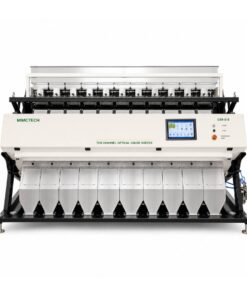
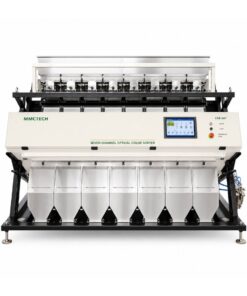
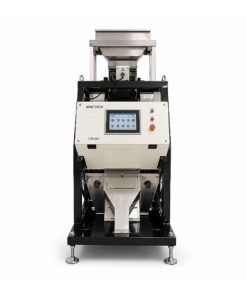
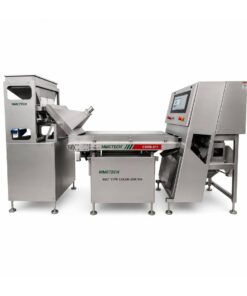
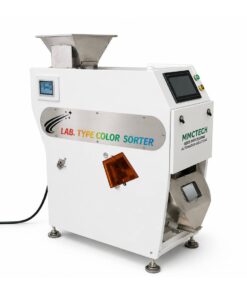
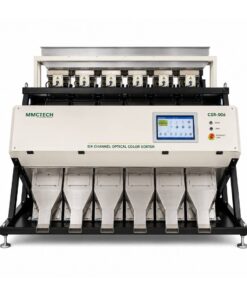
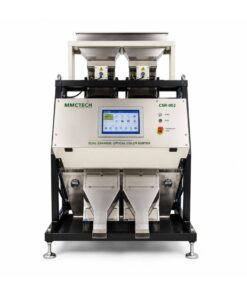
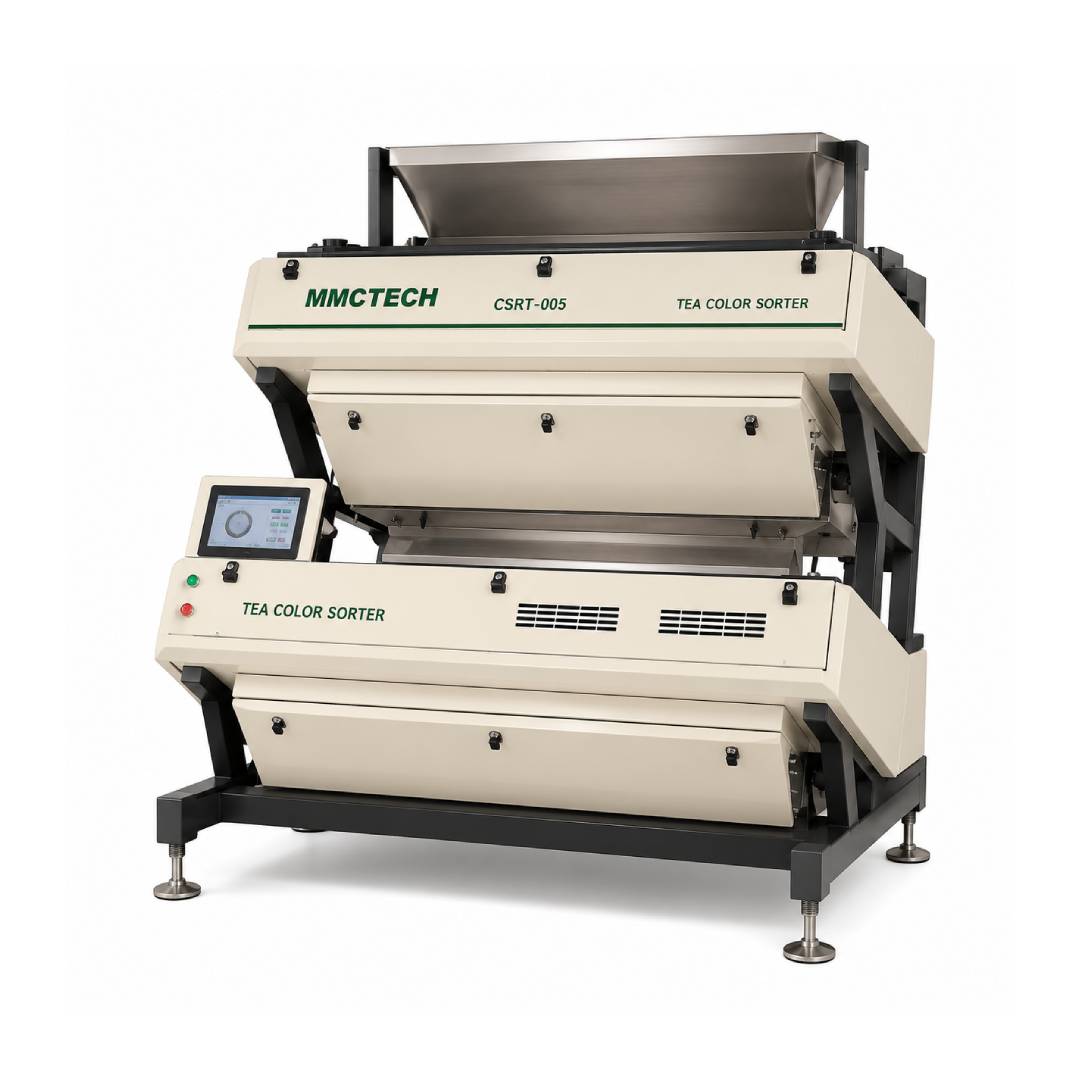
The MMCTECH CSRT-005 Tea Color Sorter is an industrial tea sorting machine and optical tea leaf sorter designed for Chunmee green tea, black tea, oolong tea, herbal tea, loose-leaf tea, and broken tea processing. Using high-resolution CCD camera inspection, controlled product feeding, and high-speed pneumatic rejection, the tea color sorter machine identifies and removes stalks, stems, discolored leaves, coarse waste, foreign material, and visually defective product while supporting consistent final tea quality.
Manufactured for commercial tea factories, specialty tea companies, herbal product processors, tea exporters, contract processing facilities, and automated tea packaging plants, the CSRT-005 provides a product-dependent nominal processing capacity of approximately 1,763–3,306 lbs/hour (800–1,500 kg/hour). Actual throughput depends on tea type, leaf size, bulk density, moisture, product flow, stalk percentage, impurity level, required final grade, feeding consistency, optical contrast, sorting sensitivity, and whether the tea is processed in one or multiple passes.
The CSRT-005 is suitable for companies searching for a tea color sorter, tea sorting machine, tea color sorter machine, tea sorter, tea leaf sorting machine, tea leaf grader, optical tea sorter, or industrial tea sorting equipment. Its application-specific design allows tea leaves to be inspected according to visible color, shade, surface appearance, stalk content, and contrasting foreign material without relying entirely on manual inspection.
Optical Sorting for Chunmee Green Tea
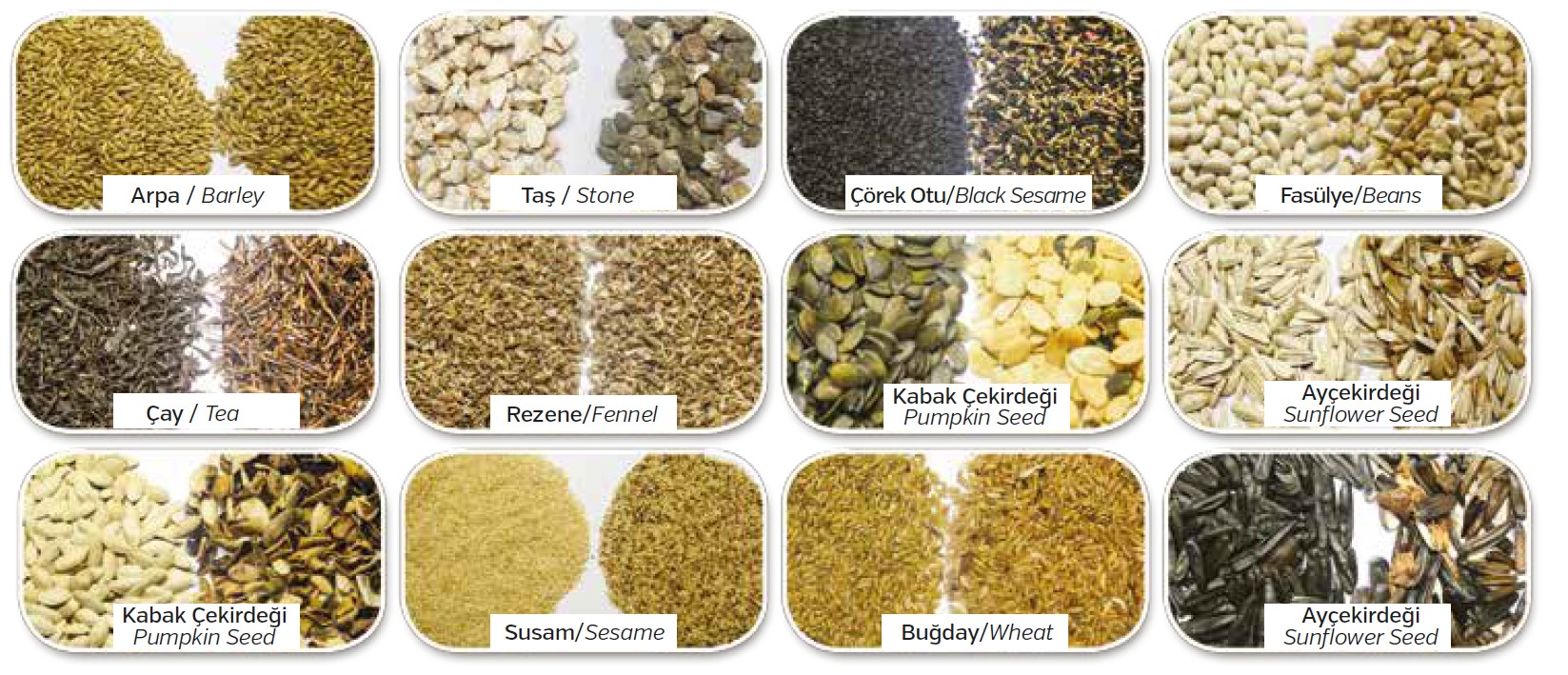
Chunmee green tea has a distinctive curled leaf shape and recognizable green-to-grey-green appearance. Product quality can be affected by unwanted stalks, stems, yellow leaves, brown leaves, dark particles, coarse material, inconsistent leaf colors, and foreign matter. The CSRT-005 can be configured for optical sorting of Chunmee green tea by creating a product-specific recipe based on the acceptable leaf color and the defects the processor wants to remove.
During Chunmee green tea sorting, the CCD camera system observes the product as it moves through the optical inspection area. When a stalk, discolored leaf, or contrasting foreign particle is detected, the corresponding pneumatic ejector produces a precisely timed air pulse that redirects the unwanted material into the reject stream.
A properly configured Chunmee green tea sorter may support:
- Tea stalk and stem removal
- Yellow or brown leaf rejection
- Dark particle separation
- Coarse waste removal
- Contrasting foreign material separation
- More consistent visible leaf color
- Improved final product presentation
- Preparation of premium and export-quality tea grades
Final results depend on the visible difference between acceptable Chunmee tea and the target defect. Optical sorting does not guarantee removal of material that has the same color and surface appearance as the accepted tea.
Tea Leaf Sorting Machine with CCD Camera Technology
The CSRT-005 uses CCD color camera technology to inspect visible differences in tea leaves and unwanted material. CCD camera sorting provides a repeatable method of evaluating tea color, shade, visible damage, stalk content, and foreign particles as the product passes through the machine.
Depending on the selected recipe and available optical contrast, the tea leaf sorting machine may help identify:
- Tea stalks and stems
- Yellow tea leaves
- Brown or dark leaves
- Over-processed or heat-discolored material
- Coarse tea waste
- Visibly damaged leaves
- Foreign plant material
- Contrasting seeds or granular impurities
- Particles outside the selected color range
- Visually inconsistent tea fractions
The camera system works with electronically controlled pneumatic ejectors. The CSRT-005 is equipped with 250 high-speed ejectors that remove targeted particles while allowing accepted tea to continue toward the clean-product outlet.
Sorting sensitivity should be adjusted carefully. Very aggressive rejection settings may remove more defects but can also send acceptable tea into the reject stream. The correct operating recipe should balance final tea quality, acceptable product recovery, capacity, and compressed-air consumption.
How Does the CSRT-005 Tea Sorting Machine Work?
The tea sorting process begins with controlled feeding. Tea must enter the optical inspection area in a consistent and sufficiently separated product layer so individual leaves, stems, and impurities can be viewed by the camera system.
The CSRT-005 sorting sequence generally includes:
- Controlled feeding of screened and prepared tea
- Distribution of the tea across the optical sorting area
- CCD camera inspection of leaves, stalks, stems, and impurities
- Comparison with the selected tea sorting recipe
- Real-time acceptable-or-rejected classification
- Pneumatic rejection through 250 ejectors
- Separate collection of accepted tea and rejected material
- Optional second-pass sorting for additional quality separation
The machine can support primary defect removal followed by a secondary optical pass when the processor requires tighter final quality. One possible process is to remove coarse stalks and obvious foreign material during the first pass, then use a more sensitive recipe to separate acceptable tea into more consistent visible grades.
Green Tea, Black Tea and Oolong Tea Sorting
The CSRT-005 is designed for several dry, free-flowing tea products. Each tea variety requires its own optical recipe because natural leaf color, oxidation level, surface texture, particle size, and acceptable defect profile vary significantly.
Green Tea Color Sorting
A green tea color sorter may help remove yellow leaves, brown leaves, dark material, stalks, stems, coarse waste, and visibly inconsistent particles. Chunmee, Gunpowder, Sencha-style products, broken green tea, and other green tea varieties should be evaluated independently.
Black Tea Sorting
A black tea color sorter can be configured to detect visibly light, brown, grey, stalk-heavy, or foreign particles that contrast with the accepted black tea. Whole-leaf black tea, broken-leaf tea, fannings, and other grades have different flow characteristics and should not automatically use the same settings.
Oolong Tea Sorting
An oolong tea color sorter may help remove stems, coarse leaf material, discolored particles, and visible foreign matter. Because rolled oolong tea can have irregular shapes and natural shade variation, representative product testing is recommended before final recipe selection.
Herbal Tea Sorting
The machine may also be evaluated as an herbal tea sorting machine for suitable dry herbs, leaves, flowers, and blended plant materials. Herbal products can vary greatly in density, size, shape, color, and flowability, so final capacity and performance must be confirmed for the actual product.
Automatic Tea Sorting Machine for Stalk and Defect Removal
Manual tea sorting can require significant labor and may produce inconsistent results between operators or production shifts. The CSRT-005 automatic tea sorting machine provides camera-based inspection and repeatable pneumatic rejection according to saved operating settings.
Automatic tea sorting can support:
- Reduced dependence on manual visual inspection
- More consistent stalk and stem removal
- Continuous commercial processing
- Repeatable product recipes
- Faster response to changing tea quality
- Improved separation of visibly defective leaves
- Better consistency between production batches
- Integration with automated conveying and packaging equipment
Automation does not eliminate the need for operator inspection. Accepted and rejected samples should be reviewed throughout production so sensitivity, feeding rate, and product recovery can be adjusted when the incoming tea changes.
Tea Stalk Separator and Tea Impurity Separator
The CSRT-005 can function as an optical tea stalk separator when stalks and stems have sufficient visual contrast with the accepted tea. Depending on the tea variety and stalk appearance, the camera system can detect lighter, darker, thicker, or differently colored stalk material and activate the corresponding ejectors.
As a tea impurity separator, the machine may also remove contrasting foreign plant material, coarse waste, discolored particles, and other visually detectable contaminants. However, optical sorting should not replace screens, aspiration systems, magnets, or metal detectors where those technologies are required.
Materials that share the same color and visible appearance as the accepted tea may not be reliably removed by standard color inspection. Product testing is therefore recommended for difficult stalk, stem, or foreign-material applications.
Tea Grading Machine for Loose and Broken Tea Leaves
The CSRT-005 may support tea grading by separating visible quality fractions, but optical sorting and mechanical tea grading are not identical processes. A mechanical tea grading machine typically classifies tea according to leaf size, particle dimensions, or screen fraction. An optical tea sorter classifies material according to visible color, shade, stalk content, surface appearance, and contrasting impurities.
For the strongest results, a tea processing line may use:
- Tea feeding and metering
- Tea screening and size grading
- Dust and lightweight impurity removal
- Magnetic separation when required
- CSRT-005 optical tea sorting
- Final product inspection
- Blending or grade separation
- Weighing and packaging
Loose-leaf tea and broken tea should be processed using separate feeding and camera settings. Broken tea particles are smaller and may require a thinner product layer and a different processing rate to maintain accurate visual inspection.
Loose Leaf Tea Sorting Machine
The CSRT-005 can be configured as a loose leaf tea sorting machine for dry products that flow consistently through the feeding and optical inspection systems. Large whole leaves, curled tea, rolled oolong, and irregular herbal leaves may have different presentation characteristics.
Before full production, the operator should confirm:
- Whether the leaves flow evenly
- Whether overlapping leaves reduce camera visibility
- Whether stalks and defects have sufficient contrast
- Whether the selected feeding rate maintains separation
- Whether acceptable tea loss remains within the project target
- Whether one or two optical passes are required
Industrial Tea Sorting Equipment for Processing Plants
The CSRT-005 is manufactured for commercial tea operations that require a durable and repeatable optical quality-control stage. It can be supplied as an independent tea sorter or integrated into a complete tea processing and packaging system.
A complete installation may include:
- Tea feed hopper
- Controlled vibration feeder
- Bucket elevator or gentle conveyor
- Tea screening machine
- Dust aspiration equipment
- Magnetic separator
- CSRT-005 tea color sorter
- Accepted-tea collection
- Reject collection
- Re-sort conveyor or elevator
- Tea blending equipment
- Weighing and packaging system
- PLC and SCADA automation
MMCTECH can evaluate the entire process according to the incoming tea, required final grade, building arrangement, desired capacity, product-change frequency, compressed-air availability, and packaging format.
CSRT-005 Processing Capacity
The CSRT-005 provides a nominal product-dependent capacity range of approximately 1,763–3,306 lbs/hour (800–1,500 kg/hour). The published capacity is not a guaranteed universal rate for every tea product.
Actual tea sorting capacity is affected by:
- Tea variety
- Whole-leaf or broken-leaf structure
- Bulk density
- Leaf size and shape
- Moisture level
- Stalk and stem percentage
- Foreign-material percentage
- Required final tea grade
- Visible contrast between good and rejected material
- Product feeding consistency
- Sorting sensitivity
- Acceptable product recovery
- Single-pass or multiple-pass operation
A lower processing rate may be required when the incoming tea contains a high percentage of stalks or defects, when leaves overlap heavily, or when the customer requires a tighter final visual specification.
Compressed-Air Requirements
The CSRT-005 requires a nominal operating-air pressure of approximately 87–116 psi (0.6–0.8 MPa / 6–8 bar). Nominal compressed-air consumption is approximately 28–53 CFM (800–1,500 L/min).
Actual air consumption depends on defect percentage, ejector activity, processing rate, sensitivity, and the selected tea recipe. The compressor should be sized for the maximum expected air demand with sufficient reserve capacity.
The compressed-air installation should include:
- Correctly sized industrial compressor
- Air receiver tank
- Moisture separator
- Compressed-air dryer
- Oil filtration
- Particle filtration
- Pressure regulation
- Pressure monitoring
- Properly sized air lines
- Minimal pressure loss between compressor and sorter
Clean and dry compressed air is essential. Oil, moisture, dust, and pressure fluctuations can reduce ejector response and cause inconsistent defect rejection.
North American and International Electrical Configuration
The CSRT-005 has a nominal machine power requirement of approximately 2.7 HP (2.0 kW). For North American and international installations, the tea sorter can be configured for 208 / 240 / 480 VAC – 3 Phase – 50/60 Hz, subject to final electrical engineering.
The air compressor, elevators, feeders, conveyors, dust-control equipment, and packaging machines require separate electrical power. The total connected load should therefore be calculated for the complete tea processing line rather than the color sorter alone.
Machine Weight and Installation Planning
The CSRT-005 has a nominal machine weight of approximately 1,984 lbs (900 kg). The final installation plan should consider structural floor loading, maintenance clearance, operator access, product feed height, accepted and reject outlets, air-line routing, electrical panels, cleaning access, and safe product handling.
A support platform, feeding elevator, discharge transitions, and re-sorting arrangement may be required depending on the factory layout.
International Tea Colour Sorter Terminology
The machine is also available for international tea processors searching for a tea colour sorter machine, optical leaf sorter, tea colour sorting equipment, or automated tea grading system. MMCTECH uses the U.S. spelling “color” in its primary North American content while naturally supporting international “colour sorter” search terminology.
What Is the Difference Between Tea Screening and Optical Tea Sorting?
Tea screening separates leaves according to physical size. Screens can produce whole-leaf, broken-leaf, fannings, dust, and other size fractions. Optical tea sorting separates according to visible characteristics such as color, discoloration, stalk content, surface appearance, and contrasting foreign material.
Screening should normally be completed before optical sorting because a more uniform product size can improve feeding stability, camera visibility, defect targeting, and final product consistency.
Tea Color Sorter Maintenance
Routine maintenance helps preserve optical visibility, feeding stability, ejector response, and repeatable sorting performance. Recommended maintenance includes:
- Cleaning CCD camera inspection windows
- Cleaning illumination and background surfaces
- Cleaning product feeding components
- Removing tea dust from the sorting area
- Inspecting all 250 ejectors
- Servicing compressed-air filters
- Draining moisture separators
- Checking the compressed-air dryer
- Confirming stable operating pressure
- Inspecting accepted and reject outlets
- Checking electrical connections
- Reviewing accepted and rejected tea samples
- Confirming the correct tea recipe before production
Tea dust should not be allowed to accumulate on optical surfaces because reduced image clarity can affect defect detection and sorting consistency.
How to Select the Best Tea Sorting Machine
The best tea sorting machine should be selected according to the actual tea product and quality target rather than price or capacity alone. Buyers should evaluate:
- Tea variety and processing method
- Whole-leaf or broken-leaf product
- Required hourly capacity
- Stalk and stem percentage
- Target color defects
- Foreign-material profile
- Final product grade
- Acceptable product recovery
- Available compressed-air capacity
- Electrical service
- Installation space
- Upstream screening equipment
- Downstream blending and packaging
- Future production requirements
The CSRT-005 is suitable for commercial tea processors requiring up to approximately 3,306 lbs/hour under suitable product and operating conditions. Final selection should be supported by representative tea samples and a project-specific evaluation.
Tea Color Sorter Machine Price and Configuration
The CSRT-005 tea color sorter machine price depends on the camera and control configuration, feeding system, elevators, support platform, compressor package, air receiver, dryer, filtration, electrical voltage, automation scope, conveyors, installation support, operator training, product testing, and spare-parts package.
When comparing tea sorting equipment prices, buyers should determine whether the quotation includes:
- Tea color sorter machine
- Product feeder
- Feeding elevator or conveyor
- Support platform
- Air compressor
- Air receiver tank
- Air dryer and filters
- Accepted and reject outlets
- Electrical controls
- Commissioning
- Operator training
- Recommended spare parts
Comparing only the base machine price may not show the total installed cost of a complete tea sorting system.
CSRT-005 Tea Color Sorter Machine for Sale
MMCTECH manufactures and supplies the CSRT-005 tea sorter for Chunmee green tea processors, black tea factories, oolong tea producers, herbal tea companies, loose-leaf tea packers, tea exporters, specialty food processors, and automated tea production facilities.
Companies searching for a tea color sorter, tea sorting machine, tea color sorter machine, tea sorter, optical sorting Chunmee green tea, tea leaf sorting machine, tea leaf sorter, tea grading machine, green tea color sorter, black tea color sorter, optical tea sorter, industrial tea sorting machine, tea stalk separator, tea impurity separator, or tea sorting equipment can contact MMCTECH for current pricing, product testing, technical specifications, compressed-air requirements, automation options, and a project-specific quotation.