



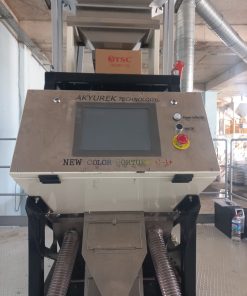

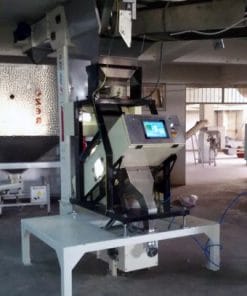

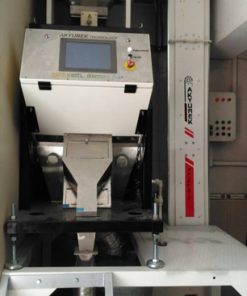


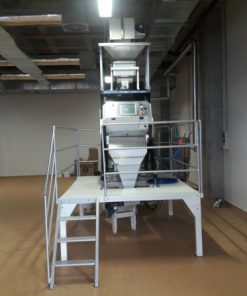

Single Channel Mini Color Sorter Machine for Seeds, Grains, Pulses and Specialty Crops
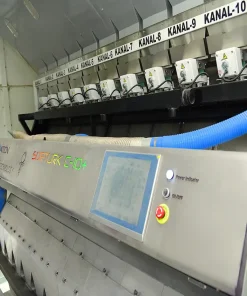
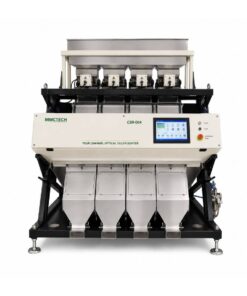
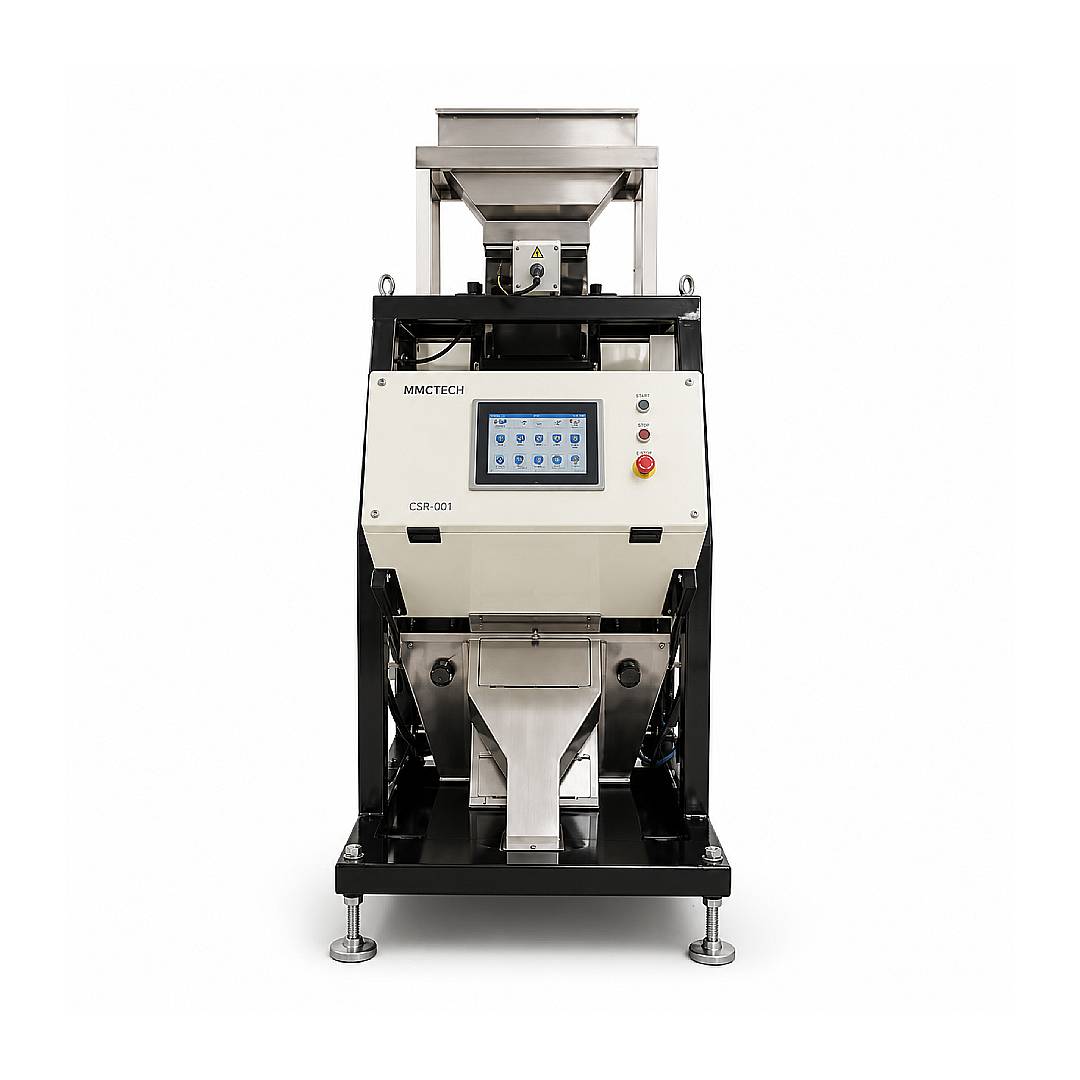
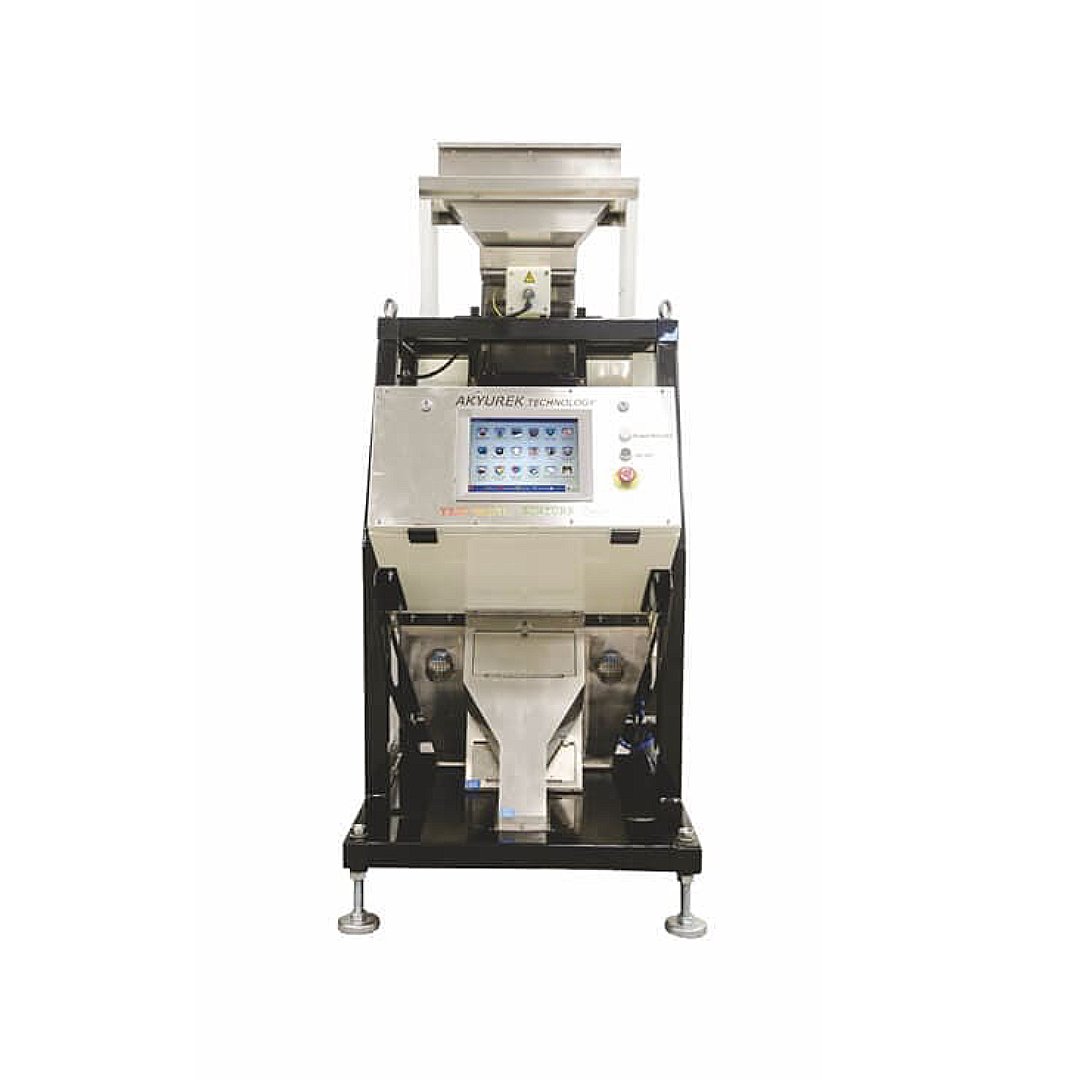
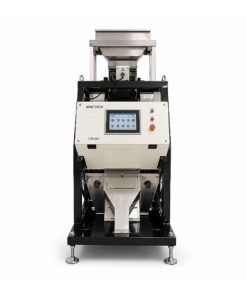
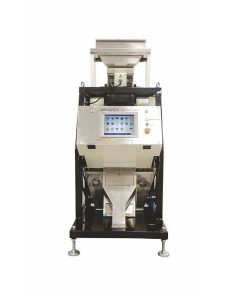
The MMCTECH CSR-001 Single Channel Mini Color Sorter Machine is a compact industrial optical sorting system manufactured for seed companies, grain processors, pulse cleaning facilities, food processors, specialty crop operations, research centers, and small-to-medium-capacity production plants. Equipped with a CCD color camera, one precision sorting channel, and 63 high-speed pneumatic ejectors, the CSR-001 identifies and removes discolored, defective, damaged, foreign, and visually inconsistent particles from cleaned, dry, and free-flowing products.
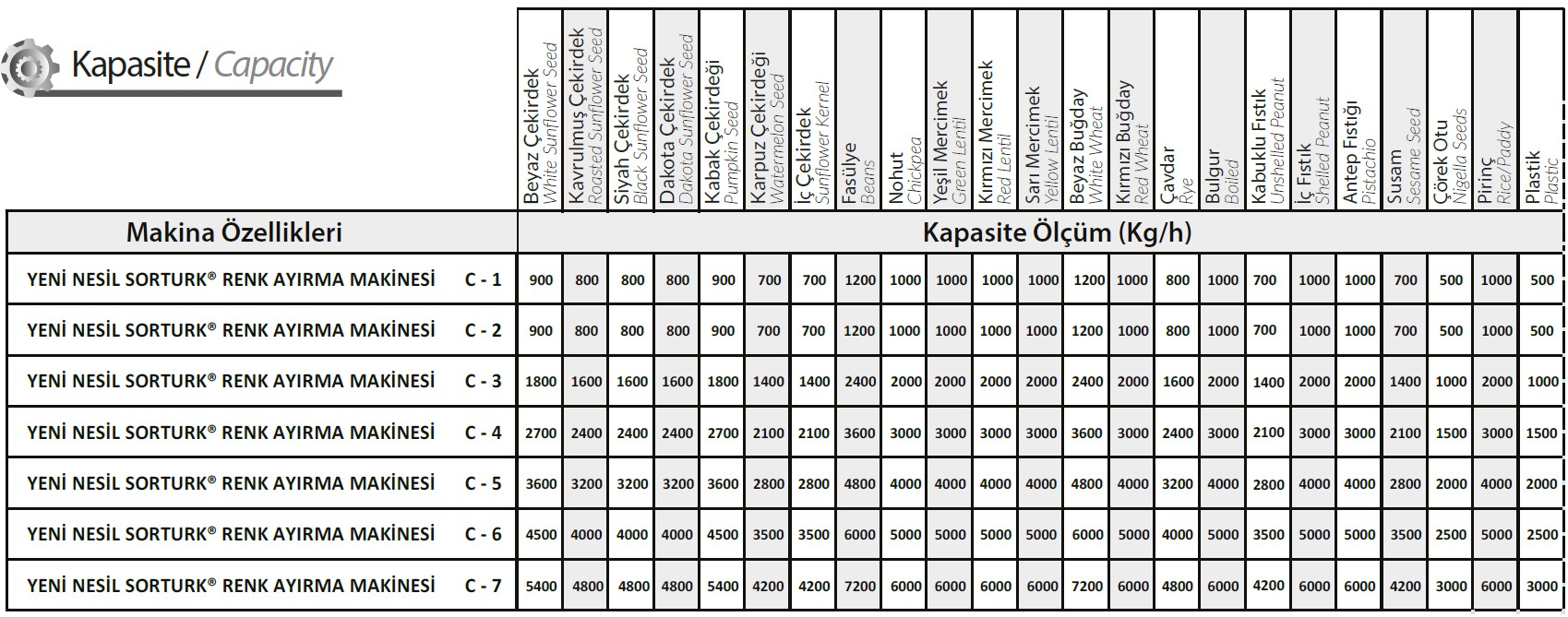
Designed for processors searching for the best color sorter machine for lower-capacity production, the CSR-001 combines professional optical sorting technology with a compact footprint and product-dependent capacities ranging from approximately 1,102 to 2,646 lbs/hour (500 to 1,200 kg/hour). This makes it suitable for businesses comparing a mini color sorter, small optical sorting machine, seed color sorter, grain color sorter for sale, or compact color sorting system for specialty crops and premium food products.
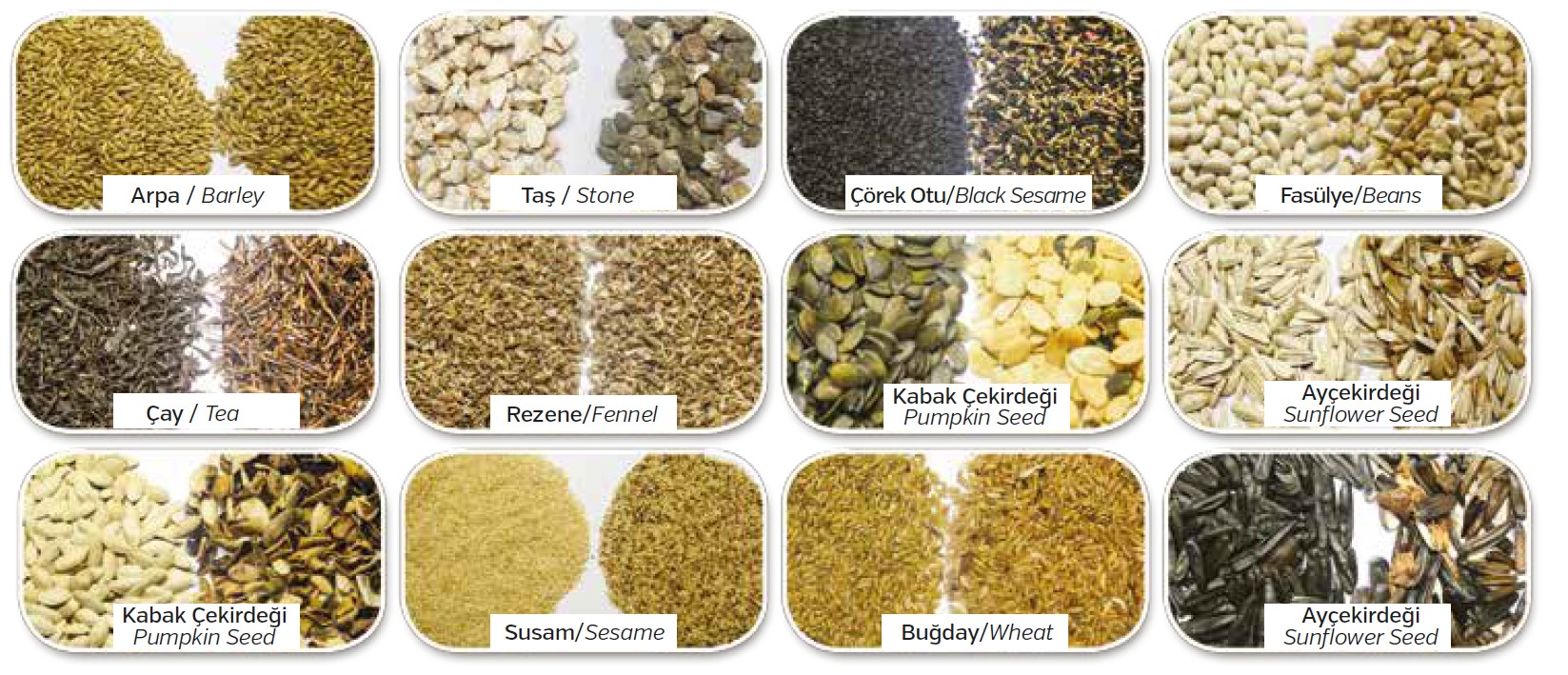
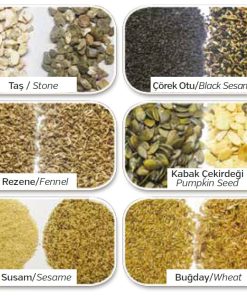
The CSR-001 can be configured for white sunflower seed, roasted sunflower seed, black sunflower seed, Dakota sunflower seed, pumpkin seed, watermelon seed, sunflower kernels, beans, chickpeas, green lentils, red lentils, yellow lentils, white wheat, red wheat, rye, bulgur, unshelled peanuts, shelled peanuts, pistachios, sesame, nigella seed, rice paddy, and suitable plastic granules. Capacity varies according to product size, bulk density, moisture, flowability, contamination level, defect contrast, required purity, acceptable recovery rate, and machine settings.
Compact Professional Color Sorting Equipment
The CSR-001 is positioned between small laboratory sorting equipment and larger multi-channel industrial color sorters. It provides a practical solution for processors that require professional CCD optical inspection but do not need the capacity, compressed-air demand, or installation footprint of a larger CSR model.
Typical applications include:
- Small-scale commercial seed processing plants
- Specialty grain cleaning operations
- Hybrid and foundation seed production
- Pulse and legume processing facilities
- Oilseed and edible seed cleaning lines
- Premium food ingredient preparation
- Research and product-development facilities
- Contract seed cleaning businesses
- Organic crop processing operations
- Final quality-control stations before packaging
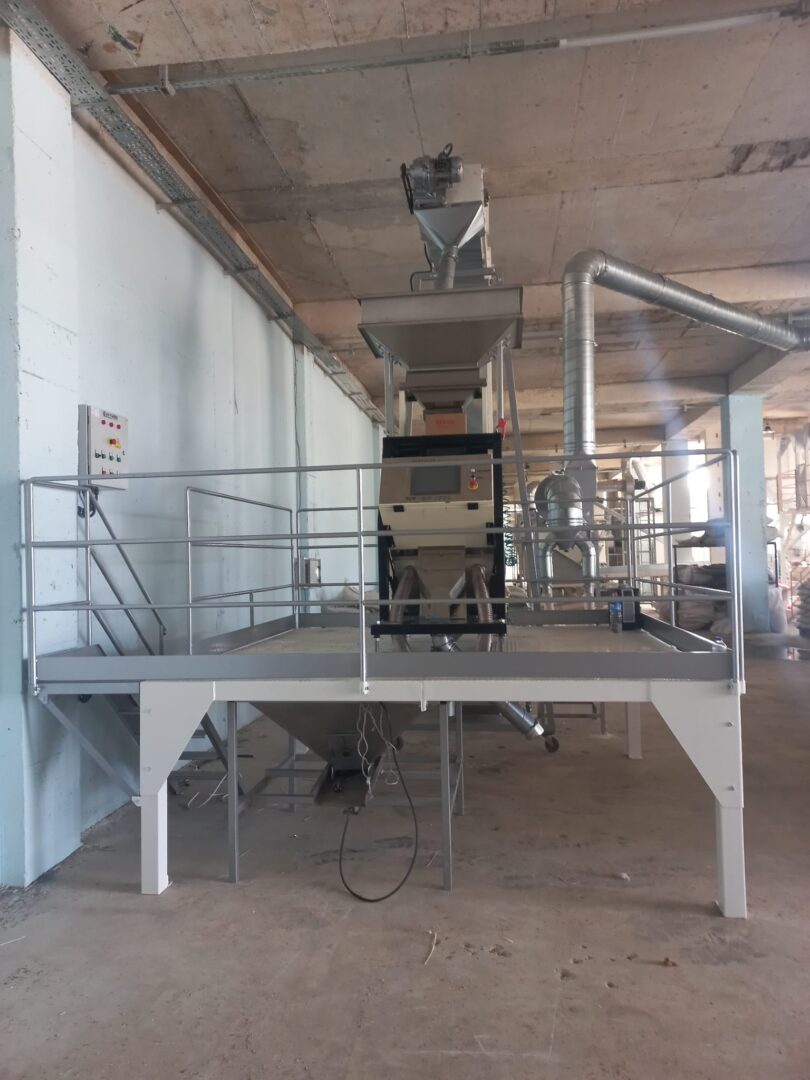
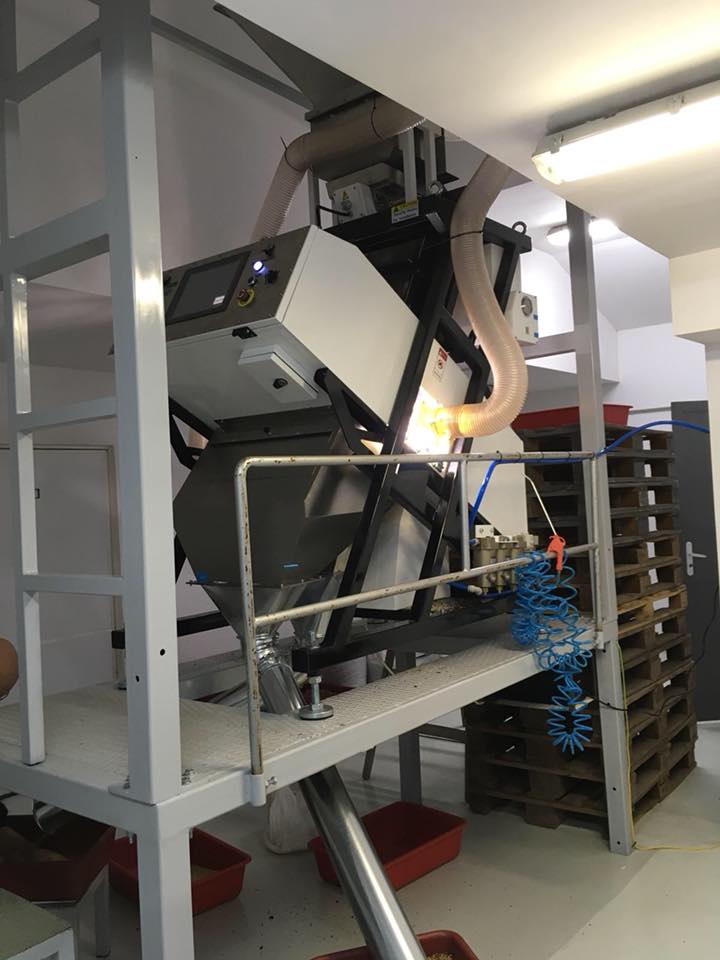
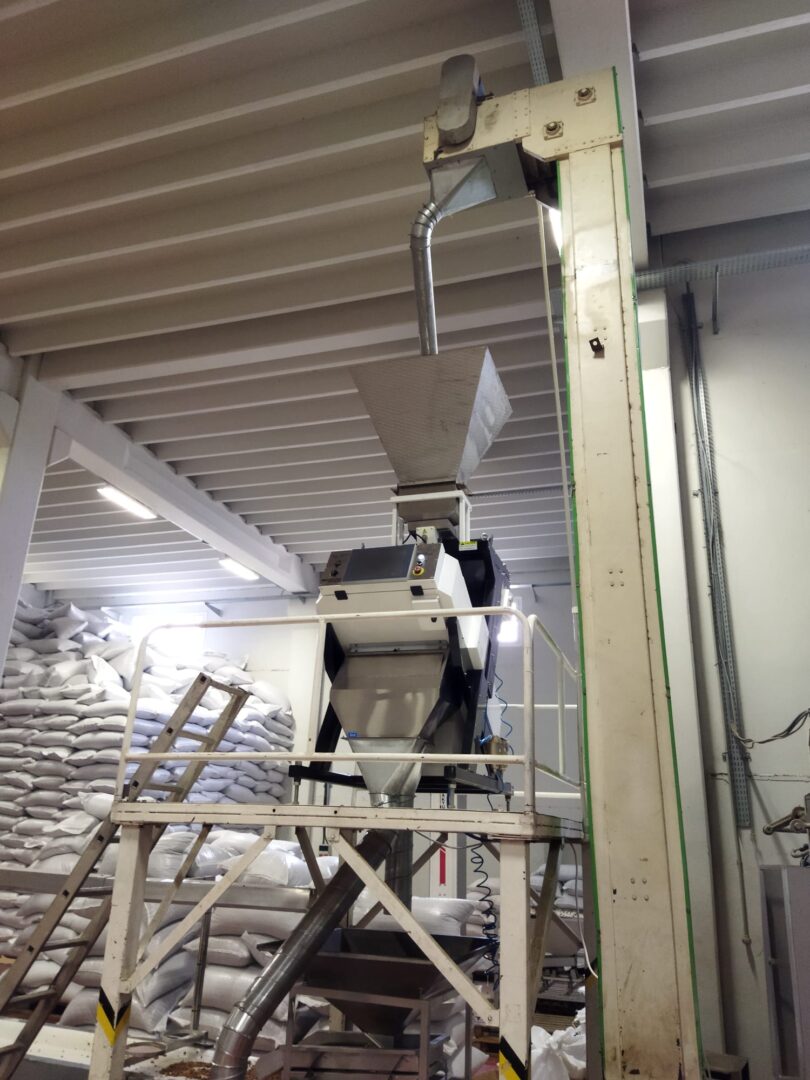
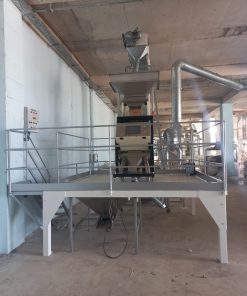
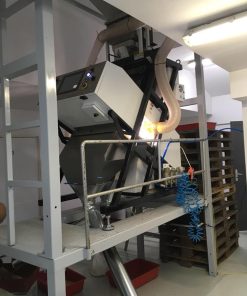
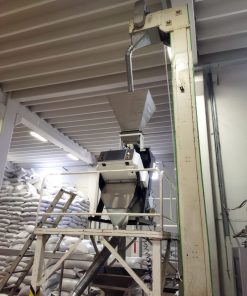
Unlike simple tabletop or demonstration sorters, the CSR-001 is designed as a production machine that can be integrated with elevators, feeders, platforms, air compressors, accepted-product outlets, reject collection systems, conveyors, and bagging equipment.
How Does the CSR-001 Optical Color Sorter Work?
The product is delivered to the color sorter through a controlled feeding system. The feed arrangement distributes the material into the machine’s single optical sorting channel, where it accelerates into the camera inspection zone. The CCD color camera observes the moving product and compares its visible characteristics with the acceptable product parameters selected by the operator.
When the control system identifies a defective or unwanted particle, it sends a signal to the appropriate ejector. A short, accurately timed pulse of compressed air redirects the rejected particle away from the accepted product stream. Good product continues into the primary discharge, while the rejected material enters a separate outlet.
The optical sorting process includes:
- Controlled product feeding
- Uniform material presentation
- CCD camera inspection
- Color and visual characteristic analysis
- Real-time accept-or-reject decisions
- High-speed pneumatic ejection
- Separate accepted and rejected product discharge
The CSR-001 also includes a discharge arrangement with two primary output channels plus a bouncing-grain outlet. This configuration helps separate accepted product, rejected material, and particles that do not follow the intended discharge trajectory.
CCD Color Camera Sorting Technology
The CSR-001 uses CCD color imaging to detect visible differences between acceptable material and unwanted particles. Depending on the product and sorting recipe, the machine may identify:
- Dark-colored defects
- Light-colored defects
- Stained seeds and grains
- Discolored kernels
- Damaged product
- Immature material with visible differences
- Burned or heat-damaged particles
- Mold-discolored material
- Shell fragments
- Foreign material with contrasting color
- Product with inconsistent surface appearance
The machine makes optical decisions based on visible appearance. It does not replace equipment designed to classify products by size, length, shape, weight, density, magnetic response, or internal chemical composition.
Optional NIR Camera Configuration
An optional NIR camera configuration may be evaluated for applications where visible color differences alone are not sufficient. Near-infrared technology may support the detection of certain material differences that are difficult to distinguish with standard color imaging.
NIR suitability depends on the physical and spectral characteristics of the accepted and rejected materials. Sample testing is recommended before specifying an NIR-equipped machine because not every defect produces a measurable near-infrared contrast.
Mini Seed Color Sorter Machine
The MMCTECH CSR-001 can be used as a compact seed color sorter machine for operations that need to improve seed appearance, remove visibly defective material, and prepare a more uniform final product. It is particularly useful after mechanical seed cleaning and density separation.
Potential seed applications include:
- Sunflower seed
- Pumpkin seed
- Watermelon seed
- Wheat seed
- Bean seed
- Chickpea seed
- Lentil seed
- Sesame seed
- Nigella seed
- Specialty planting seed
Planting seed frequently requires several processing stages because a single sorting principle cannot remove every impurity. Screens remove products according to size. Air systems remove lightweight material. Gravity separators classify according to density. Indented cylinders separate by length. Magnetic separators remove responsive metal contamination. The CSR-001 provides the final visual sorting stage for particles that differ in color or surface appearance.
Sunflower Seed Color Sorting
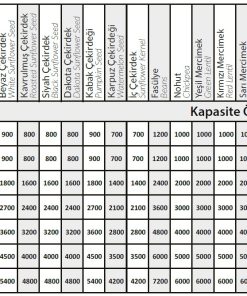
The CSR-001 provides different nominal capacities for several sunflower products:
- White sunflower seed: approximately 1,984 lbs/hour (900 kg/hour)
- Roasted sunflower seed: approximately 1,764 lbs/hour (800 kg/hour)
- Black sunflower seed: approximately 1,764 lbs/hour (800 kg/hour)
- Dakota sunflower seed: approximately 1,764 lbs/hour (800 kg/hour)
- Sunflower kernels: approximately 1,543 lbs/hour (700 kg/hour)
The machine can help remove visibly damaged, stained, darkened, light-colored, burned, or foreign particles when sufficient optical contrast exists. Roasted products, kernels, and natural seed varieties may require separate sorting recipes because their normal colors and surface characteristics differ.
Pumpkin and Watermelon Seed Color Sorter
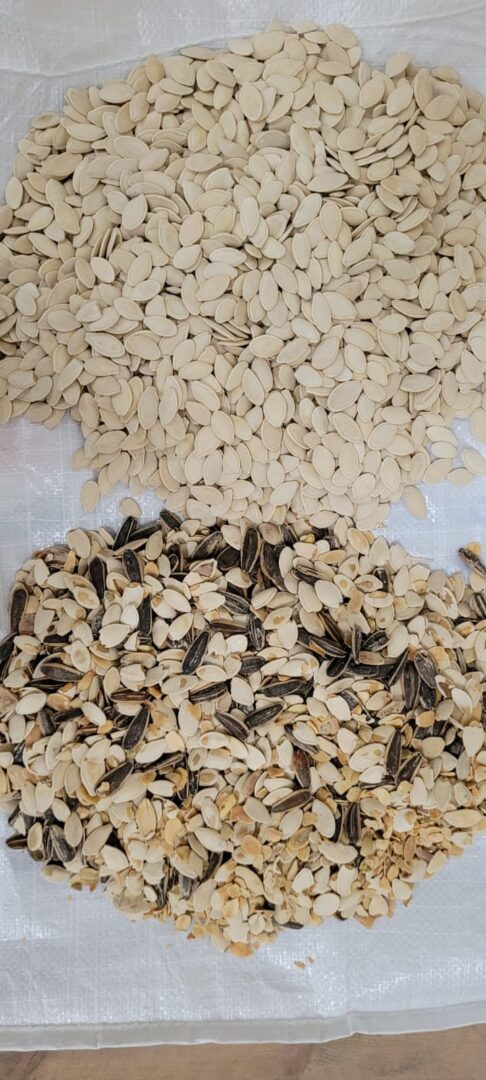
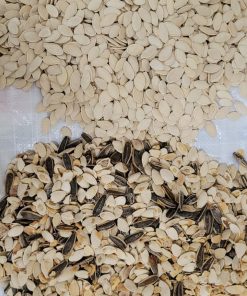
The nominal capacity for pumpkin seed is approximately 1,984 lbs/hour (900 kg/hour), while the nominal watermelon seed capacity is approximately 1,543 lbs/hour (700 kg/hour).
Pumpkin and watermelon seeds can vary in size, color, surface texture, and moisture. Consistent feeding and suitable pre-cleaning are important because overlapping seeds or excessive product depth can make individual inspection more difficult.
Bean and Chickpea Color Sorting Machine
The CSR-001 provides one of its highest nominal capacities when processing beans:
- Beans: approximately 2,646 lbs/hour (1,200 kg/hour)
- Chickpeas: approximately 2,205 lbs/hour (1,000 kg/hour)
Optical sorting can help remove beans or chickpeas that are visibly discolored, stained, damaged, darkened, immature, or inconsistent with the selected product standard. However, density-related defects with the same appearance as good product may require a gravity separator before the color sorter.
Green, Red and Yellow Lentil Color Sorter
The CSR-001 has a nominal capacity of approximately 2,205 lbs/hour (1,000 kg/hour) for green lentils, red lentils, and yellow lentils.
Each lentil variety requires its own optical recipe. A setting prepared for green lentils should not automatically be used for red or yellow lentils because the acceptable background color, defect contrast, and rejection sensitivity will be different.
Before color sorting, lentils should normally pass through suitable screening, aspiration, stone removal, and density separation stages. This reduces dust, broken material, stones, lightweight defects, and unnecessary ejector activity.
Wheat, Rye and Bulgur Optical Sorting
The CSR-001 can operate as a compact wheat color sorter or optical grain sorter with the following nominal capacities:
- White wheat: approximately 2,646 lbs/hour (1,200 kg/hour)
- Red wheat: approximately 2,205 lbs/hour (1,000 kg/hour)
- Rye: approximately 1,764 lbs/hour (800 kg/hour)
- Bulgur: approximately 2,205 lbs/hour (1,000 kg/hour)
For wheat and rye, the system may help identify dark kernels, discolored grains, visually damaged product, foreign seeds, and other particles that contrast with the accepted product. Bulgur applications should be evaluated according to particle size, dust level, surface appearance, and production method.
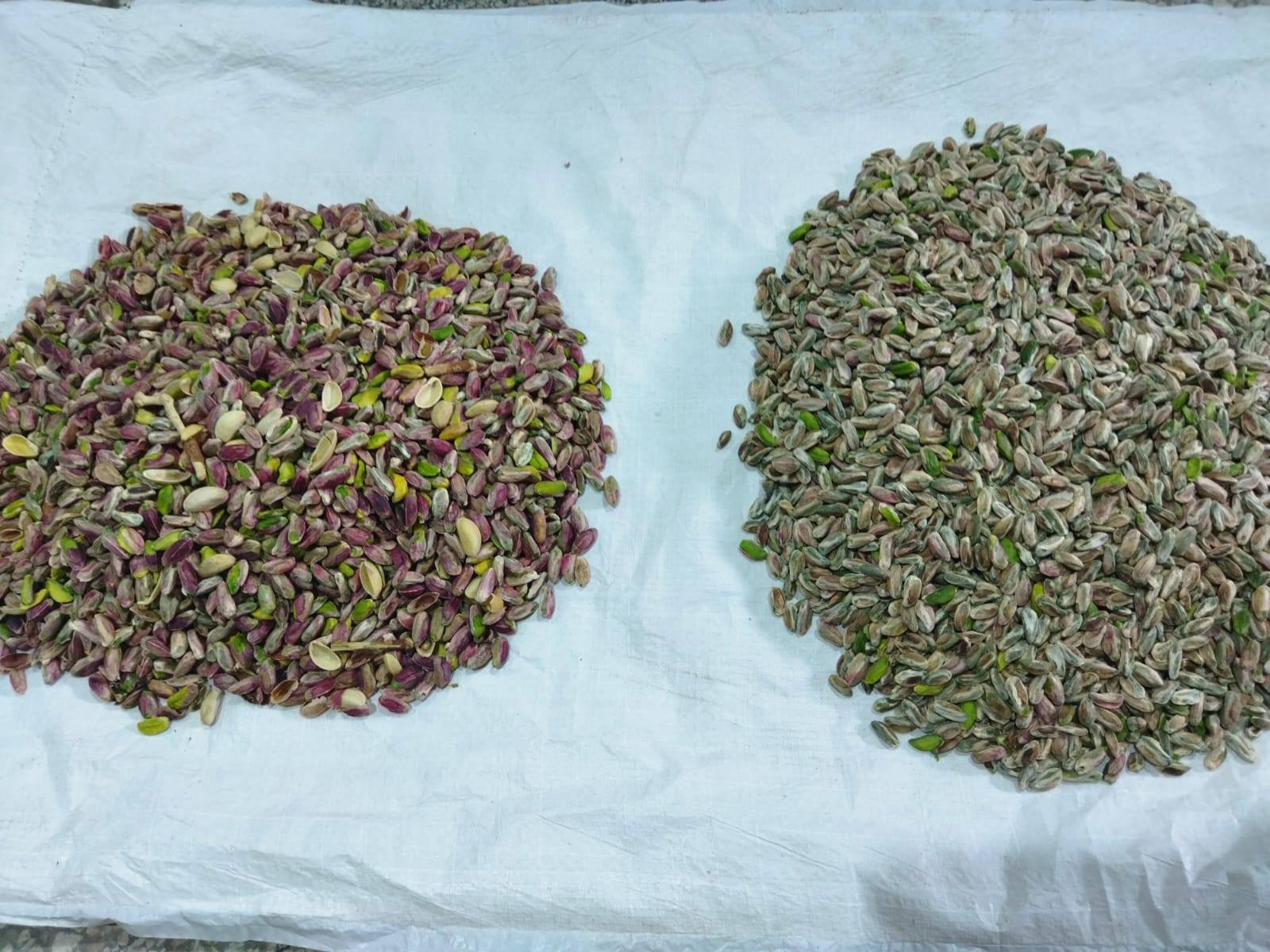
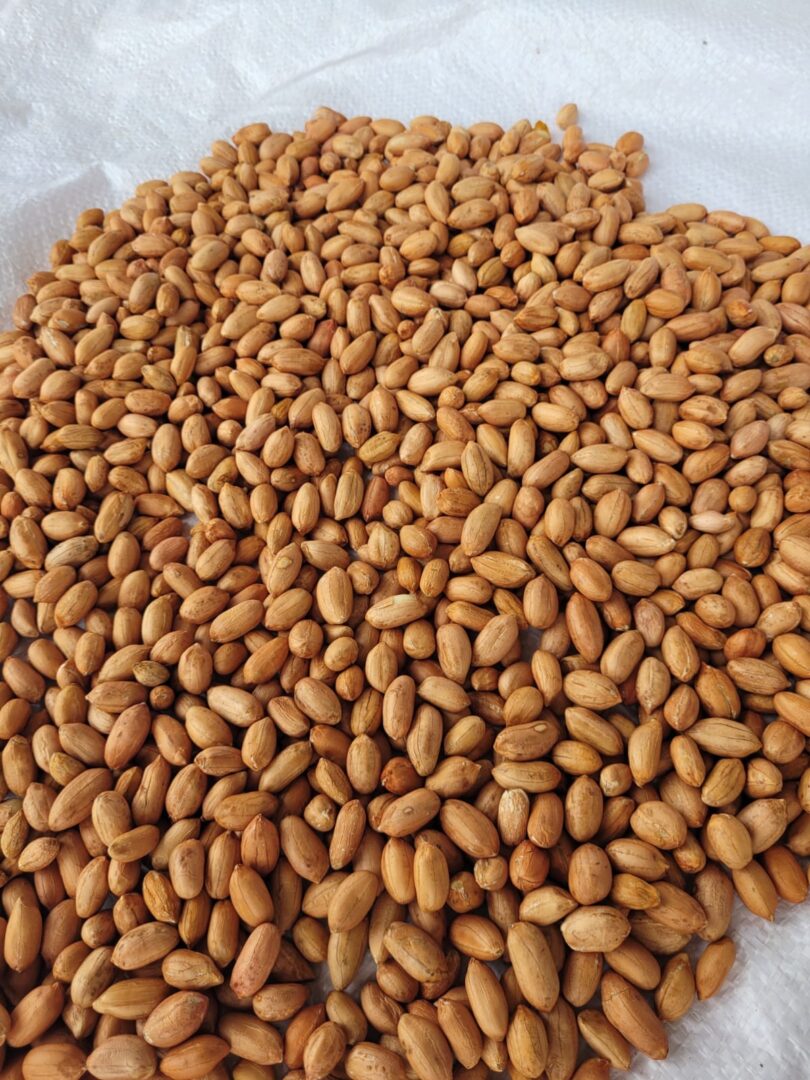
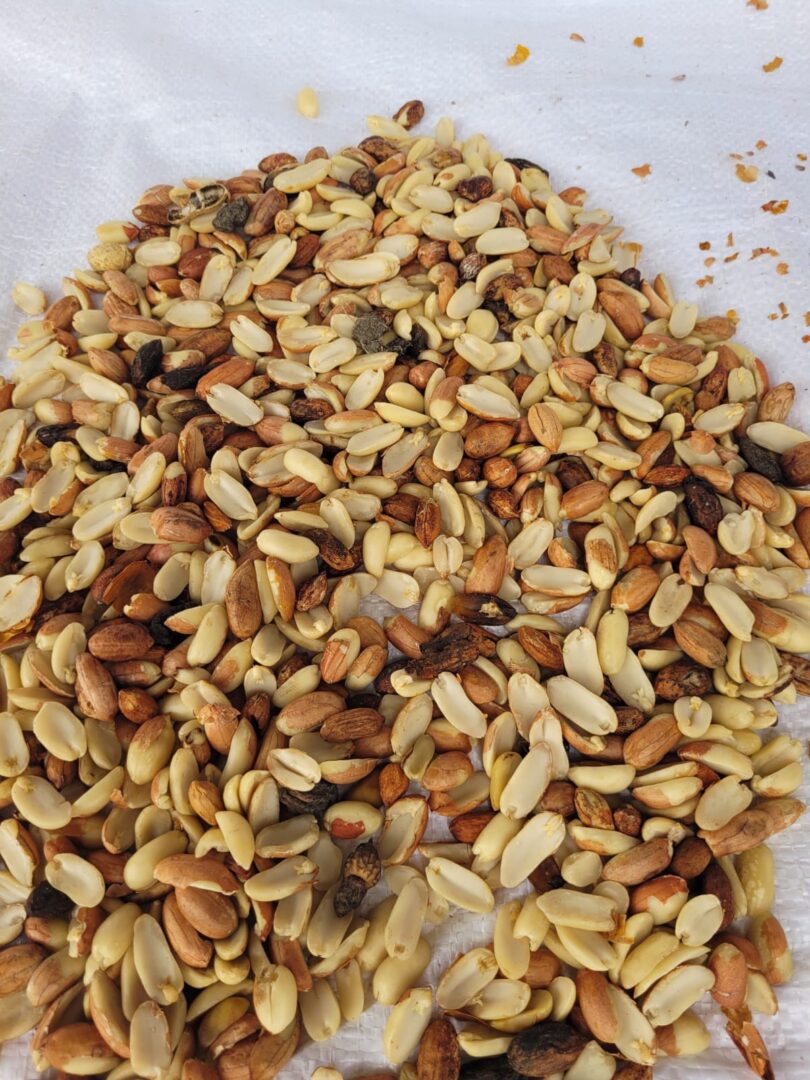
Peanut and Pistachio Color Sorting
The CSR-001 can be configured for:
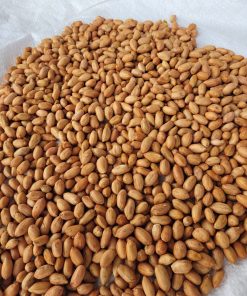
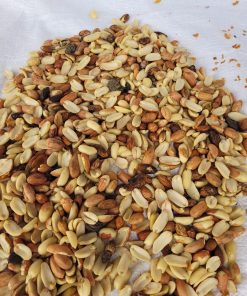
- Unshelled peanuts: approximately 1,543 lbs/hour (700 kg/hour)
- Shelled peanuts: approximately 2,205 lbs/hour (1,000 kg/hour)
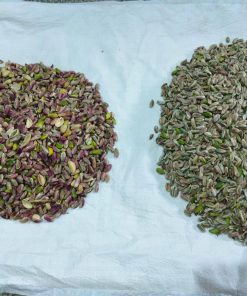
- Pistachios: approximately 2,205 lbs/hour (1,000 kg/hour)
Peanut and pistachio products can have irregular shapes and natural color variations. Product testing is therefore recommended to determine the most suitable sensitivity, background, lighting, feeding rate, and reject strategy.
A peanut color sorter may help remove visibly damaged, darkened, stained, mold-discolored, or foreign particles, but optical sorting should remain part of a wider food-safety and quality-control program.
Sesame and Nigella Seed Color Sorting
Small seeds require controlled product feeding and accurate ejector timing. The CSR-001 provides nominal capacities of:
- Sesame: approximately 1,543 lbs/hour (700 kg/hour)
- Nigella seed: approximately 1,102 lbs/hour (500 kg/hour)
Because sesame and nigella are smaller than beans, chickpeas, or wheat, the production rate is lower. A thinner and more controlled product stream helps the camera inspect individual seeds and allows the ejectors to remove defects more accurately.
Rice Paddy Color Sorting
The CSR-001 has a nominal rice paddy capacity of approximately 2,205 lbs/hour (1,000 kg/hour). It can be used to remove visible defects and foreign material when sufficient contrast exists between acceptable paddy and the unwanted fraction.
Rice paddy should be properly pre-cleaned before entering the color sorter. Dust, straw, stones, broken material, and excessive foreign matter can reduce optical visibility, increase air consumption, and create unnecessary rejection.
Plastic Granule Color Sorting
In addition to agricultural products, the CSR-001 may be evaluated for suitable plastic granules at a nominal capacity of approximately 1,102 lbs/hour (500 kg/hour). The machine may separate granules according to visible color differences when the material flows consistently through the optical channel.
Plastic applications should be reviewed separately because static electricity, transparency, reflectivity, irregular particle shape, and material temperature may affect feeding and optical inspection.
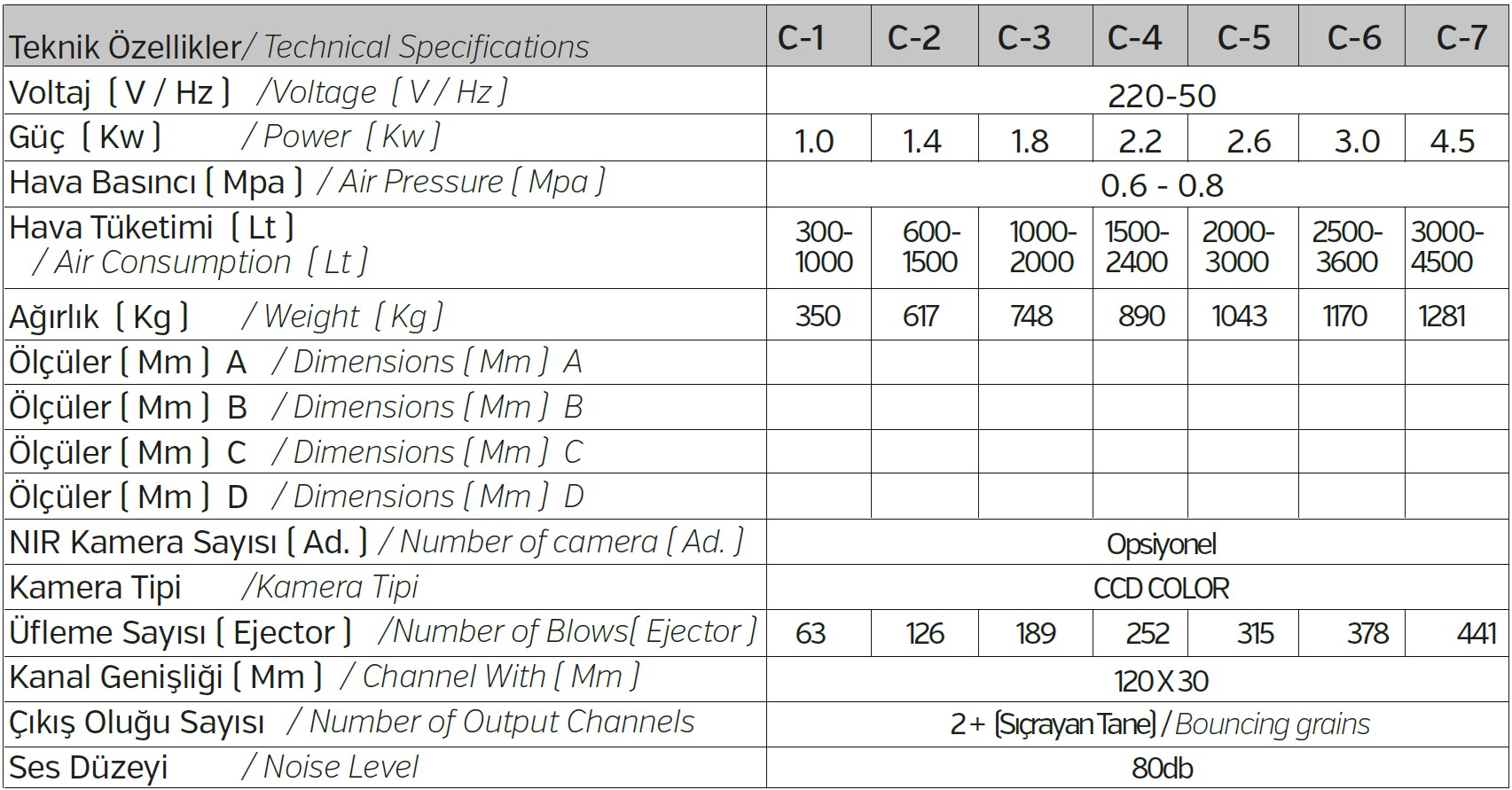
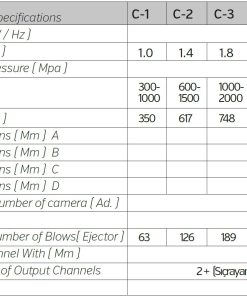
63 High-Speed Ejectors
The CSR-001 is equipped with 63 pneumatic ejectors. Each ejector responds to optical sorting decisions generated by the control system. A precise pulse of compressed air changes the trajectory of the unwanted particle while allowing acceptable material to continue to the primary outlet.
Ejector performance depends on:
- Stable compressed-air pressure
- Clean and dry air
- Correct ejector timing
- Product speed
- Particle size
- Product presentation
- Defect percentage
- Sorting sensitivity
- Routine maintenance
Higher reject percentages increase ejector activity and compressed-air consumption. Excessive sensitivity may also remove acceptable product, which reduces recovery even when final purity improves.
Correct Compressed-Air Pressure
The CSR-001 requires an operating air pressure of approximately 87–116 psi (0.6–0.8 MPa). This pressure range is significantly higher than 8.7–11.6 psi and should be considered when selecting the air compressor, dryer, filters, receiver tank, and pressure-regulation system.
Nominal air consumption is approximately 10.6–35.3 CFM (300–1,000 liters per minute). Actual consumption depends on the percentage of rejected material, number of active ejectors, sorting sensitivity, product speed, and operating recipe.
The compressed-air system should provide:
- Stable operating pressure
- Clean air
- Dry air
- Oil removal
- Moisture separation
- Adequate receiver capacity
- Sufficient reserve airflow
- Minimal pressure drop between the compressor and sorter
Why Optical Grain Sorter Pre-Cleaning Is Important
A color sorter should normally receive a product that has already been mechanically cleaned. Pre-cleaning helps the camera and ejector system focus on defects that require optical separation rather than processing excessive dust, chaff, stones, oversized debris, undersized material, or lightweight impurities.
A complete processing sequence may include:
- Seed or grain pre-cleaner
- Fine screen cleaner
- Aspiration system
- Destoner
- Gravity separator
- Indented cylinder separator when required
- Magnetic separator
- CSR-001 optical color sorter
- Final inspection
- Weighing, bagging, or bulk storage
Proper pre-cleaning can improve optical visibility, reduce contamination on camera windows, decrease ejector workload, lower compressed-air consumption, improve recovery, and support more consistent sorting results.
Color Sorter Versus Seed Cleaner
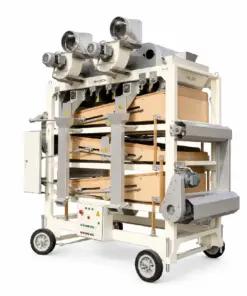
A seed cleaner separates products using screens, airflow, and mechanical characteristics. It can remove oversize impurities, undersize particles, dust, chaff, and certain broken products. A color sorter inspects the visible appearance of individual particles and removes material that differs from the programmed product standard.
The CSR-001 does not replace a seed cleaner. It is generally installed after mechanical cleaning as a final or near-final quality-control stage.
Color Sorter Versus Gravity Separator
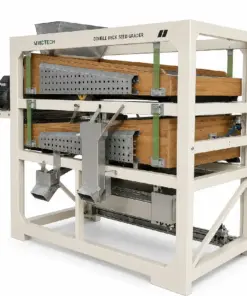
A gravity separator classifies particles according to specific gravity or density. It can remove hollow, immature, insect-damaged, lightweight, or low-density particles even when those particles have the same color as acceptable product.
The CSR-001 classifies particles according to visible appearance. A defective particle with the same color as good product may not be removed optically, while a gravity table may remove it because of its lower density. For this reason, gravity separation and optical sorting often complement each other.
Color Sorter Versus Size Grader
A screen grader classifies products according to width and thickness. An indented cylinder separates according to length. The CSR-001 does not provide calibrated size grading. Products should be size-graded before optical sorting when variations in particle size interfere with consistent feeding or inspection.
Is CSR-001 the Best Color Sorter for a Small Plant?
The best color sorter machine is the model that matches the actual product, hourly capacity, required purity, defect characteristics, available compressed air, electrical system, installation space, operating experience, and future growth plans.
The CSR-001 may be the most suitable model when the processor requires:
- A single-channel color sorter
- Product-dependent capacity up to 2,646 lbs/hour
- A compact optical sorting system
- CCD color camera inspection
- 63 pneumatic ejectors
- Optional NIR evaluation
- Frequent product changeovers
- Small commercial batches
- Specialty crop processing
- Lower capacity than a multi-channel sorter
Processors requiring higher throughput should compare the CSR-001 with the larger CSR-002, CSR-003, CSR-004, CSR-005, CSR-006, CSR-007, and CSR-010 models.
Standalone Color Sorter or Complete Processing Line
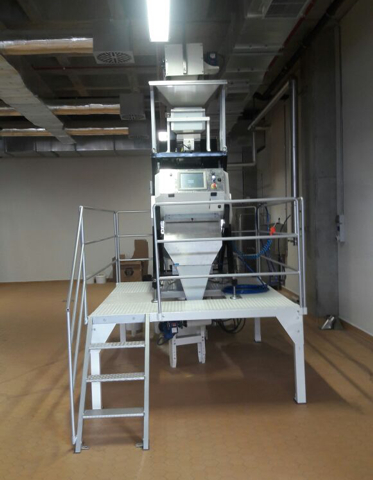
The CSR-001 can be supplied as standalone optical sorting equipment or integrated into a complete MMCTECH processing plant. A standalone installation may still require:
- Feed hopper
- Bucket elevator
- Controlled feeder
- Machine platform
- Air compressor
- Air receiver
- Air dryer and filtration
- Accepted-product collection
- Reject collection
- Bouncing-grain collection
- Downstream conveyor or bagging equipment
MMCTECH can develop project-specific layouts that coordinate machine elevations, product flow, platform access, maintenance clearances, air-line routing, electrical connections, and downstream product handling.
PLC and Automation Integration
The CSR-001 can be incorporated into an MMCTECH automated seed or grain processing plant. Depending on the project, automation functions may include:
- Upstream elevator interlocks
- Feeder start and stop control
- Product-flow monitoring
- Low-air-pressure alarms
- Emergency-stop integration
- Downstream conveyor interlocks
- Production status indication
- Central control panel integration
- PLC-controlled operating sequences
- SCADA plant monitoring
The optical sorting recipe remains specific to the machine and product, while the plant automation system coordinates overall material movement and equipment sequencing.
North American and International Electrical Standards
The CSR-001 has a nominal machine power requirement of 1.0 kW (approximately 1.3 HP). For North American and international projects, the electrical system can be configured for 208 / 240 VAC – 3 Phase – 50/60 Hz, subject to final electrical engineering and destination requirements.
The air compressor, elevator, feeder, dust equipment, and conveyors have separate electrical requirements and must be included when calculating the total connected load for the installation.
Machine Weight, Channel Size and Noise Level
The CSR-001 has a nominal machine weight of approximately 772 lbs (350 kg). Its sorting channel has a nominal cross-sectional measurement of approximately 4.72 × 1.18 in (120 × 30 mm).
The published sound level is approximately 80 dB. Actual workplace noise can vary according to the compressor, product, elevators, surrounding equipment, building acoustics, air discharge, and machine installation. Suitable hearing protection and workplace noise evaluation may be required according to local regulations.
Color Sorter Maintenance
Routine inspection and cleaning are essential for maintaining optical visibility, feeding consistency, air quality, and ejector response. Recommended maintenance includes:
- Cleaning camera inspection windows
- Cleaning lighting and background surfaces
- Cleaning the sorting channel
- Checking the product feeder
- Inspecting the 63 ejectors
- Checking compressed-air filters
- Draining moisture separators
- Inspecting the air dryer
- Confirming operating pressure
- Checking accepted and reject outlets
- Inspecting the bouncing-grain outlet
- Checking electrical connections
- Reviewing accepted and rejected product samples
- Verifying the selected product recipe
Color Sorter Machine Price
The CSR-001 color sorter machine price depends on the optical configuration, optional NIR system, feeding equipment, platform, bucket elevator, compressor capacity, air dryer, filtration system, electrical standard, automation scope, conveyors, installation services, product testing, operator training, and spare-parts package.
When comparing a cheap sorting machine with a professional industrial color sorter, buyers should review the complete installed scope rather than only the base machine price. A quotation may or may not include the elevator, feeder, compressor, dryer, platform, air receiver, discharge transitions, electrical controls, training, and commissioning.
CSR-001 Mini Color Sorter for Sale
MMCTECH manufactures and supplies the CSR-001 Single Channel Mini Color Sorter for seed processors, grain cleaning companies, pulse facilities, oilseed operations, food ingredient manufacturers, specialty crop processors, research centers, and contract cleaning businesses.
Companies searching for a grain color sorter for sale, mini color sorter machine, seed color sorter machine, small optical sorting machine, CCD color sorter, optical grain sorter, color sorting equipment, or color sorter machine manufacturer can contact MMCTECH for current pricing, product evaluation, technical specifications, compressor requirements, automation options, and a project-specific quotation.