Rare Earth Magnetic Belt Separator for Seed, Grain & Agricultural Product Sorting
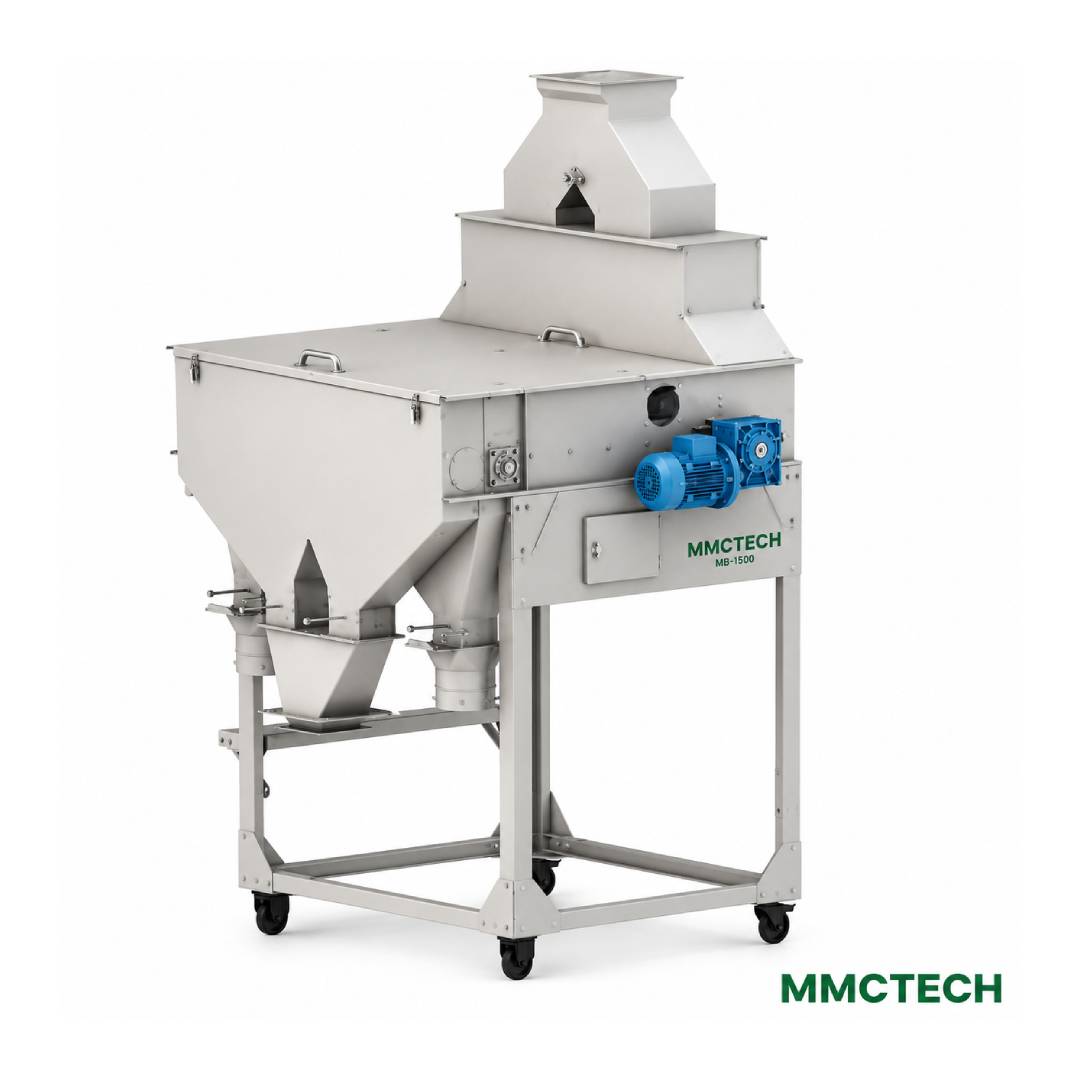
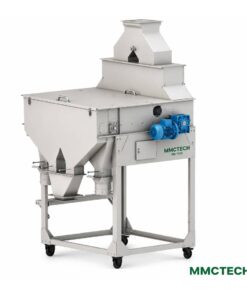
The MMCTECH Rare Earth Magnetic Belt Separator – MB-1500 is an industrial magnetic separation machine manufactured for removing ferromagnetic and responsive weakly magnetic particles from free-flowing seeds, grains, pulses, oilseeds, feed ingredients, food products, and suitable bulk materials. Combining a short belt conveyor with a powerful rare earth magnetic head pulley, the MB-1500 provides continuous magnetic sorting while maintaining an organized and controlled product flow.
The magnetic belt separator is particularly suitable for agricultural products in which unwanted particles may have similar dimensions, density, or visual appearance to the acceptable product. These contaminants may be difficult to remove using conventional screens, air separators, gravity separators, or optical color sorters alone. The MB-1500 adds a dedicated magnetic separation stage that responds to the magnetic characteristics of the material rather than relying only on size, shape, weight, or color.
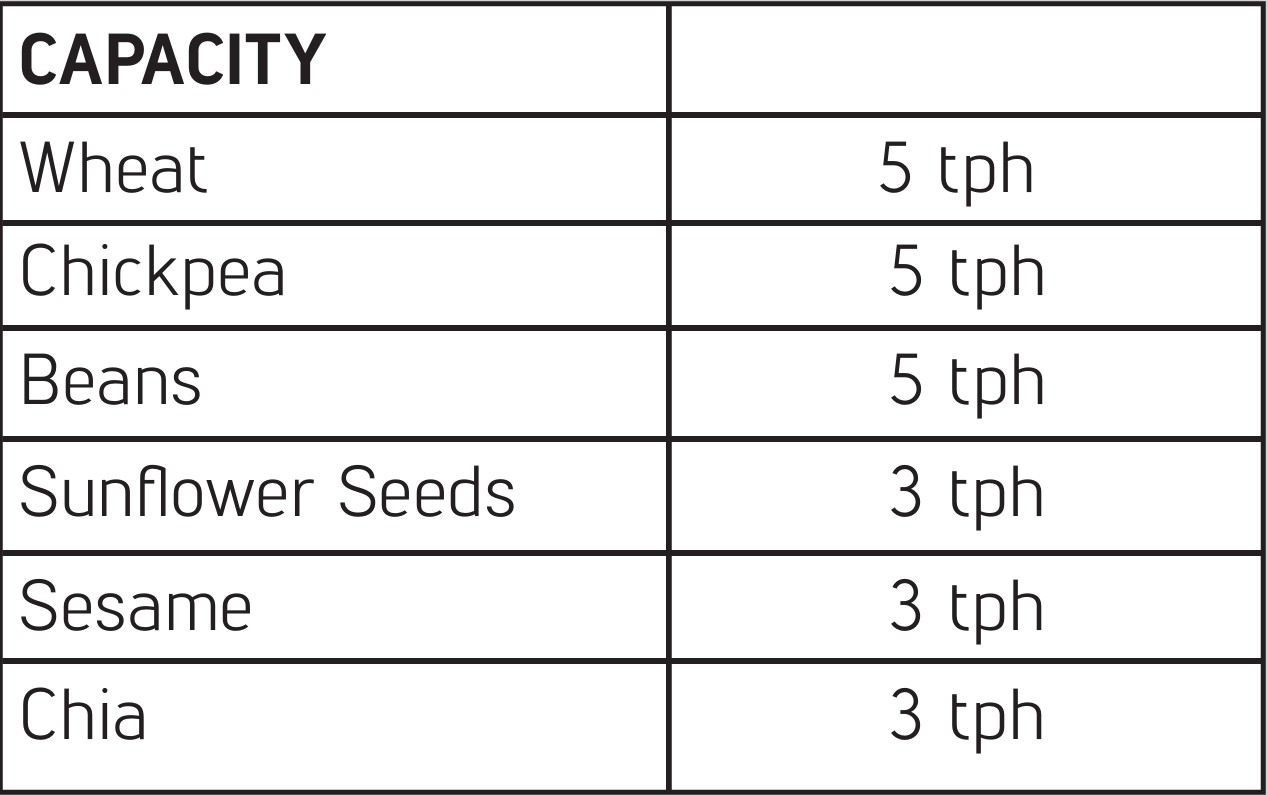
With nominal capacities up to 5.5 short tons per hour (5 metric tons per hour) for wheat, chickpeas, and beans, and up to 3.3 short tons per hour (3 metric tons per hour) for sunflower seeds, sesame, and chia, the MB-1500 is designed for commercial seed processing plants, grain cleaning facilities, pulse processing operations, oilseed plants, food production lines, and specialty crop cleaning projects.
How Does a Rare Earth Magnetic Belt Separator Work?
The MB-1500 uses a short, controlled-speed conveyor belt to carry the product toward a rare earth magnetic head pulley. As the belt passes around the pulley, non-magnetic product follows its normal discharge trajectory. Ferromagnetic and magnetically responsive particles are temporarily held closer to the belt by the magnetic field and are released at a different point after leaving the strongest magnetic zone.
This difference in discharge trajectory creates separation between the acceptable product and the magnetically responsive fraction. The final separation result depends on:
- Magnetic response of the contaminating material
- Magnetic pulley strength and field depth
- Product layer thickness
- Belt speed
- Feed uniformity
- Particle size and shape
- Product moisture
- Bulk density
- Discharge splitter position
- Required purity level
For efficient operation, the material should be distributed across the belt in a thin and even layer. Excessive feed depth can shield lower particles from the magnetic field and reduce separation accuracy. MMCTECH evaluates the actual crop, contamination, capacity, and installation requirements before defining the recommended feeding and operating arrangement.
Magnetic Separation for Seeds, Grains, Pulses & Oilseeds
The MMCTECH MB-1500 is designed for suitable free-flowing agricultural products, including:
- Wheat
- Chickpeas
- Beans
- Kidney beans
- Lentils
- Peas and pulses
- Sunflower seeds
- Sesame seeds
- Chia seeds
- Oilseeds
- Feed ingredients
- Specialty seeds
- Selected food-grade granular products
The magnetic belt separator can be used to remove ferrous metal contamination introduced through harvesting, transport, storage, conveying, worn machinery, fasteners, or previous processing stages. It may also assist with the separation of naturally magnetic or weakly magnetic particles when the material responds sufficiently to the rare earth magnetic field.
Rare Earth Magnetic Pulley Separator
The core separation component of the MB-1500 is its rare earth magnetic pulley. Unlike a standard conveyor pulley, the magnetic pulley generates a strong magnetic field at the product discharge point. This enables the conveyor itself to become an active magnetic sorting zone.
The magnetic pulley arrangement provides several operational advantages:
- Continuous magnetic separation during belt operation
- No separate magnetic grid obstructing product flow
- Automatic discharge of captured magnetic material
- Compact installation footprint
- Controlled separation trajectory
- Suitable integration with upstream feeders and downstream conveyors
- Reduced manual cleaning compared with fixed magnetic bars
Because magnetic particles are released automatically after leaving the magnetic field, the MB-1500 can operate continuously without requiring operators to repeatedly stop production and manually clean the magnetic surface.
Magnetic Sorting Machine for High-Value Agricultural Products
Specialty products such as sesame, chia, sunflower, pulses, and high-value planting seed often require multiple separation stages. Screening removes oversize and undersize material. Aspiration removes lightweight impurities. Gravity separation removes particles with different density. Color sorting removes visible defects. Magnetic separation adds another quality-control stage for contaminants that respond to a magnetic field.
The MB-1500 can therefore complement:
- Seed pre-cleaners
- Fine screen seed cleaners
- Super fine screen cleaners
- Gravity separators
- Destoners
- Indented cylinder separators
- Air separators
- Spiral separators
- Color sorting machines
- Seed polishing systems
- Dehulling and milling machines
- Bagging and weighing equipment
The magnetic belt separator does not replace these machines. It performs a different separation function and is selected where the contamination or unwanted material has sufficient magnetic response.
Should a Magnetic Belt Separator Be Installed Before or After a Color Sorter?
In many processing plants, the magnetic belt separator is installed before the color sorter. Removing ferrous and magnetically responsive contaminants before optical sorting can help protect the color sorter, reduce unnecessary material entering the optical inspection zone, and improve the overall organization of the final cleaning process.
However, the best installation point depends on the crop, contamination type, required purity, and complete plant flow. The MB-1500 may also be installed after preliminary screening and aspiration so that oversized debris, fine dust, and lightweight waste are removed before the product reaches the magnetic belt.
A common processing sequence may include:
- Pre-cleaning
- Fine screen cleaning
- Aspiration
- Gravity or density separation
- Magnetic belt separation
- Color sorting
- Final inspection
- Bagging or bulk storage
MMCTECH prepares the final machine sequence according to the product and required quality specification rather than applying one fixed arrangement to every plant.
Capacity for Wheat, Chickpeas and Beans
The MB-1500 provides a nominal capacity of approximately 5.5 short tons per hour (5 metric tons per hour) for wheat, chickpeas, and beans under suitable processing conditions.
Actual throughput depends on:
- Product size and density
- Contamination level
- Required separation accuracy
- Feed layer depth
- Belt speed
- Product moisture
- Upstream feeding consistency
- Desired recovery rate
When maximum separation accuracy is required, the operating capacity may need to be reduced to maintain a thinner product layer and provide greater exposure to the magnetic field.
Capacity for Sunflower, Sesame and Chia
Sunflower seeds, sesame, and chia have different bulk density, particle size, and flow characteristics compared with wheat or chickpeas. The nominal capacity for these products is approximately 3.3 short tons per hour (3 metric tons per hour).
The lower nominal rate helps provide a controlled product layer suitable for smaller or lighter seeds. Final capacity is confirmed through application evaluation and may vary according to product cleanliness, moisture, seed variety, and separation objectives.
Compact Magnetic Separation Equipment
The MB-1500 is designed as a compact industrial magnetic separation unit with an overall machine length of approximately 66.3 in (1,685 mm), width of 47.0 in (1,195 mm), and total height of approximately 106.1 in (2,695 mm).
Its short belt conveyor arrangement allows the machine to be installed within an existing processing line without requiring the space of a long conventional belt conveyor. The machine can receive product from an elevator, feeder, hopper, gravity spout, or preceding separator and discharge into separate product and reject outlets.
The compact design makes it suitable for:
- New seed processing plants
- Existing line upgrades
- Specialty crop processing rooms
- Magnetic quality-control stations
- Pre-color-sorter installations
- Final product cleaning lines
Simple, Effective and User-Friendly Operation
The MB-1500 is designed to provide a practical magnetic separation process without unnecessary operational complexity. Its primary functions are material feeding, controlled belt conveying, magnetic separation at the head pulley, and independent discharge of accepted and magnetically responsive material.
Important operating adjustments may include:
- Feed rate
- Product layer thickness
- Belt speed
- Discharge splitter position
- Product and reject outlet routing
Correct adjustment is essential because the best setting for wheat may not be the best setting for sesame, chia, sunflower, or beans. MMCTECH provides operating guidance according to the processed material and required separation result.
Equipment Protection and Product Purity
Metal contamination can damage dehullers, mills, grinders, screw conveyors, color sorters, bagging machines, and other downstream equipment. By removing ferrous material before it enters sensitive machinery, the MB-1500 can help reduce:
- Unexpected mechanical damage
- Screen and blade wear
- Production interruptions
- Metal contamination risk
- Maintenance costs
- Rejected finished product
The machine also adds an additional quality-control point for food, feed, and agricultural processing facilities seeking improved product cleanliness.
Ferromagnetic and Paramagnetic Particle Separation
The MB-1500 is primarily intended for ferromagnetic contamination such as iron and carbon steel. It may also separate certain weakly magnetic or paramagnetic particles when their magnetic response, particle size, exposure, and operating conditions are sufficient.
Not every paramagnetic mineral or contaminant will be separated effectively. Product testing may be required when the target material is only weakly magnetic. MMCTECH evaluates sample materials and application data before confirming suitability for specialized separation duties.
Non-magnetic materials such as aluminum, copper, brass, glass, stone, and most non-magnetic stainless steels are not directly separated by a conventional rare earth magnetic pulley unless they are attached to or mixed with magnetically responsive material.
Magnetic Belt Separator Versus Magnetic Grid Separator
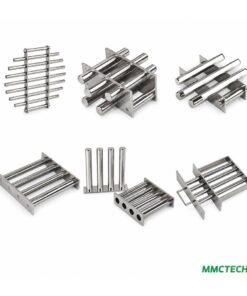
A magnetic grid separator captures ferrous contamination on fixed magnetic bars and must be periodically opened and cleaned. A magnetic belt separator continuously transports material over a magnetic pulley and automatically releases the magnetic fraction after it leaves the magnetic field.
The MB-1500 may be the better option when:
- Continuous automatic separation is required
- The contamination load is too high for frequent manual grid cleaning
- Product and reject streams must be discharged separately
- A controlled thin product layer is beneficial
- The process requires magnetic sorting rather than only metal trapping
A magnetic grid may remain preferable for compact gravity chutes, powders, small-capacity lines, or final protection points. Some facilities use both systems at different stages.
Magnetic Belt Separator Versus Housed Bullet Magnet
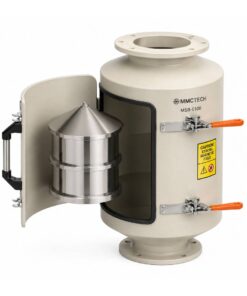
A housed bullet magnetic separator captures ferrous contamination within a gravity-fed enclosed housing. It is compact and passive but requires periodic manual cleaning. The MB-1500 uses a powered conveyor and magnetic pulley to provide continuous automatic discharge of the separated fraction.
The appropriate machine depends on capacity, contamination load, required automation, available installation space, processed product, and desired separation behavior.
North American and International Electrical Standards
The MMCTECH MB-1500 can be configured for 208 / 240 / 480 / 600 VAC – 3 Phase – 50/60 Hz electrical systems. Final motor voltage, frequency, starter, overload protection, control components, emergency stops, and variable-speed configuration are selected according to the installation location.
The machine may be integrated with an MMCTECH PLC or complete SCADA-controlled seed processing plant. Available automation functions can include:
- Conveyor start and stop control
- Variable belt speed
- Emergency stop circuit
- Motor overload protection
- Upstream and downstream equipment interlocks
- Product level monitoring
- Alarm and status indication
- Automatic processing sequences
Maintenance Requirements
Routine maintenance helps preserve belt tracking, conveyor reliability, and separation performance. Recommended inspections include:
- Checking conveyor belt alignment
- Inspecting belt tension
- Cleaning product buildup
- Checking magnetic pulley surfaces
- Inspecting bearings and drive components
- Checking the feed system
- Inspecting product and reject splitters
- Checking guards and emergency stops
- Confirming electrical connections
- Monitoring unusual vibration or noise
Maintenance frequency depends on daily operating hours, product dust, contamination load, environmental conditions, and the processed crop.
How to Choose the Best Magnetic Separation Machine
The best magnetic separator machine should be selected according to the actual material and required result. Important selection factors include:
- Type of product
- Target contamination
- Magnetic response of the reject material
- Required throughput
- Required product purity
- Particle size range
- Bulk density
- Moisture and flowability
- Required belt speed
- Available installation space
- Upstream and downstream equipment
- Electrical voltage
- Automation requirements
MMCTECH reviews these factors to determine whether the MB-1500 magnetic belt separator, an MSE magnetic grid separator, an MSB housed bullet separator, or a combination of magnetic separation systems is the best solution.
Rare Earth Magnetic Belt Separator for Sale
MMCTECH manufactures the MB-1500 Rare Earth Magnetic Belt Separator for seed processors, grain cleaning companies, pulse processors, oilseed facilities, food manufacturers, feed plants, and specialty crop operations. The machine can be supplied as standalone magnetic separation equipment or integrated into a complete seed cleaning and processing plant.
Companies searching for a rare earth magnetic pulley separator, magnetic separator machine for sale, magnetic sorting machine, agricultural magnetic separator, custom magnetic separation equipment, or continuous magnetic separation system can contact MMCTECH for application evaluation, plant integration, current pricing, and a project-specific quotation.