
Rotary Airlock Valve for Dust Collectors, Cyclones & Pneumatic Conveying Systems
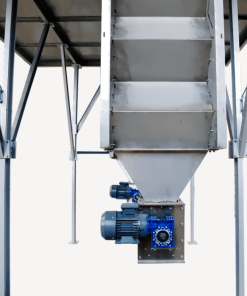
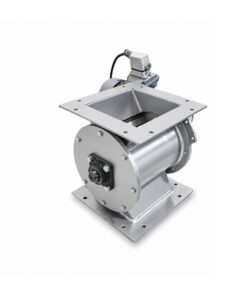
The MMCTECH Rotary Airlock Valves – DCAL-1000 Series are professional material discharge components manufactured for dust collectors, cyclones, pulse jet filters, pneumatic conveying systems, seed processing plants, grain cleaning facilities, milling operations, and industrial filtration systems. Their rotary cellular rotor design continuously discharges dust, fine particles, husks, lightweight materials, and process by-products while helping preserve the pressure balance inside the connected system.
A rotary airlock valve performs two essential functions at the same time. It allows collected material to leave a hopper or filter and creates a controlled air barrier between areas operating at different pressures. This helps reduce uncontrolled air leakage, maintain dust collection performance, prevent material accumulation, and support continuous processing without repeatedly stopping the system for manual discharge.
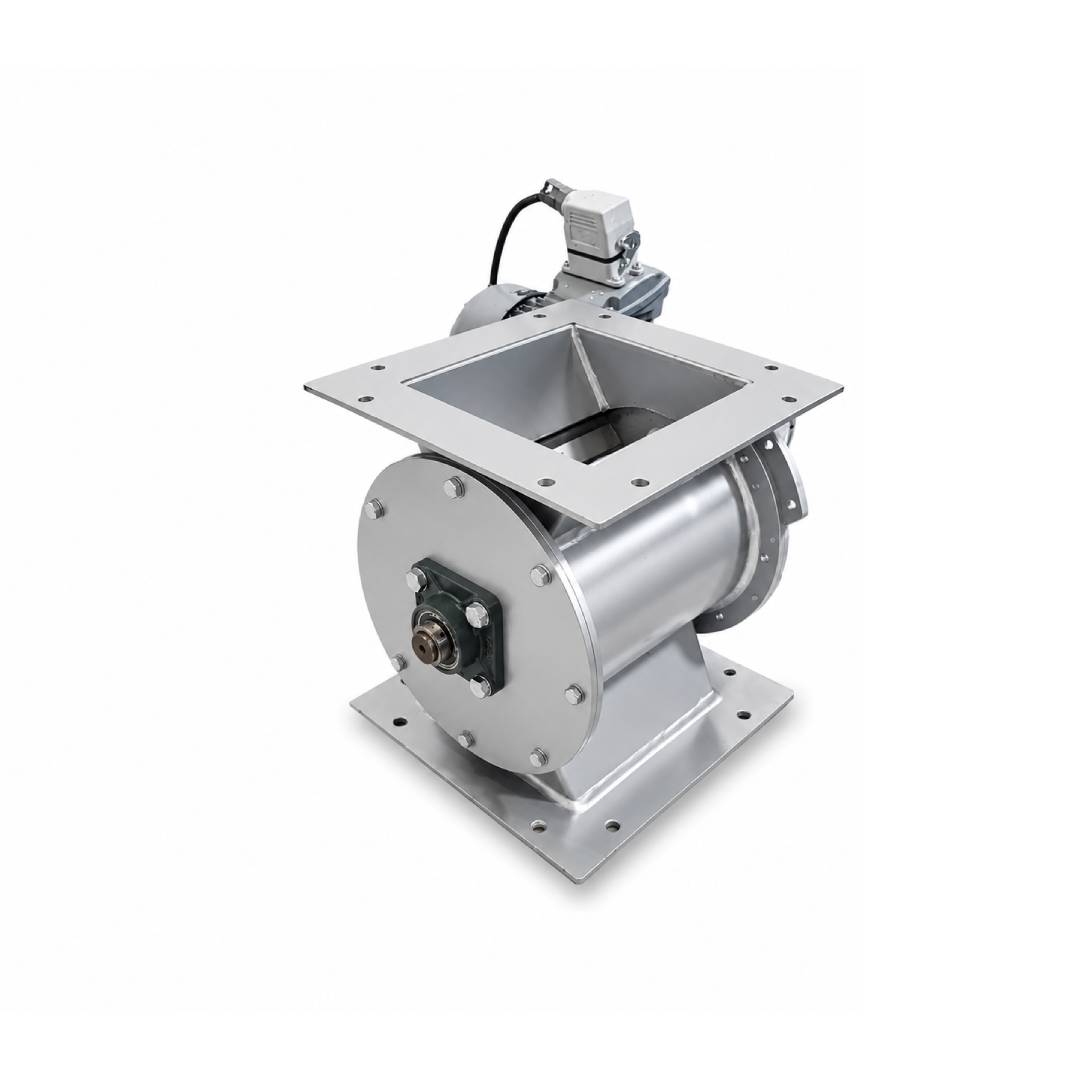
The DCAL Series is available in two principal construction options. The DCAL-1000 industrial metal rotary airlock is designed for general dust collection and material handling applications. The DCAL-1100 stainless steel/chrome rotary airlock is available for hygienic processing environments, food-related applications, and installations where improved corrosion resistance and easier cleaning are required.
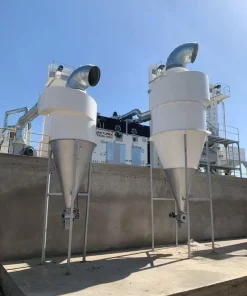
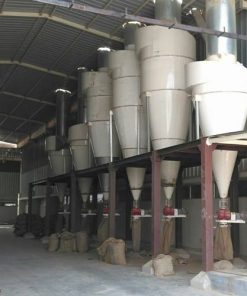
Rotary Airlock for Dust Collection Systems
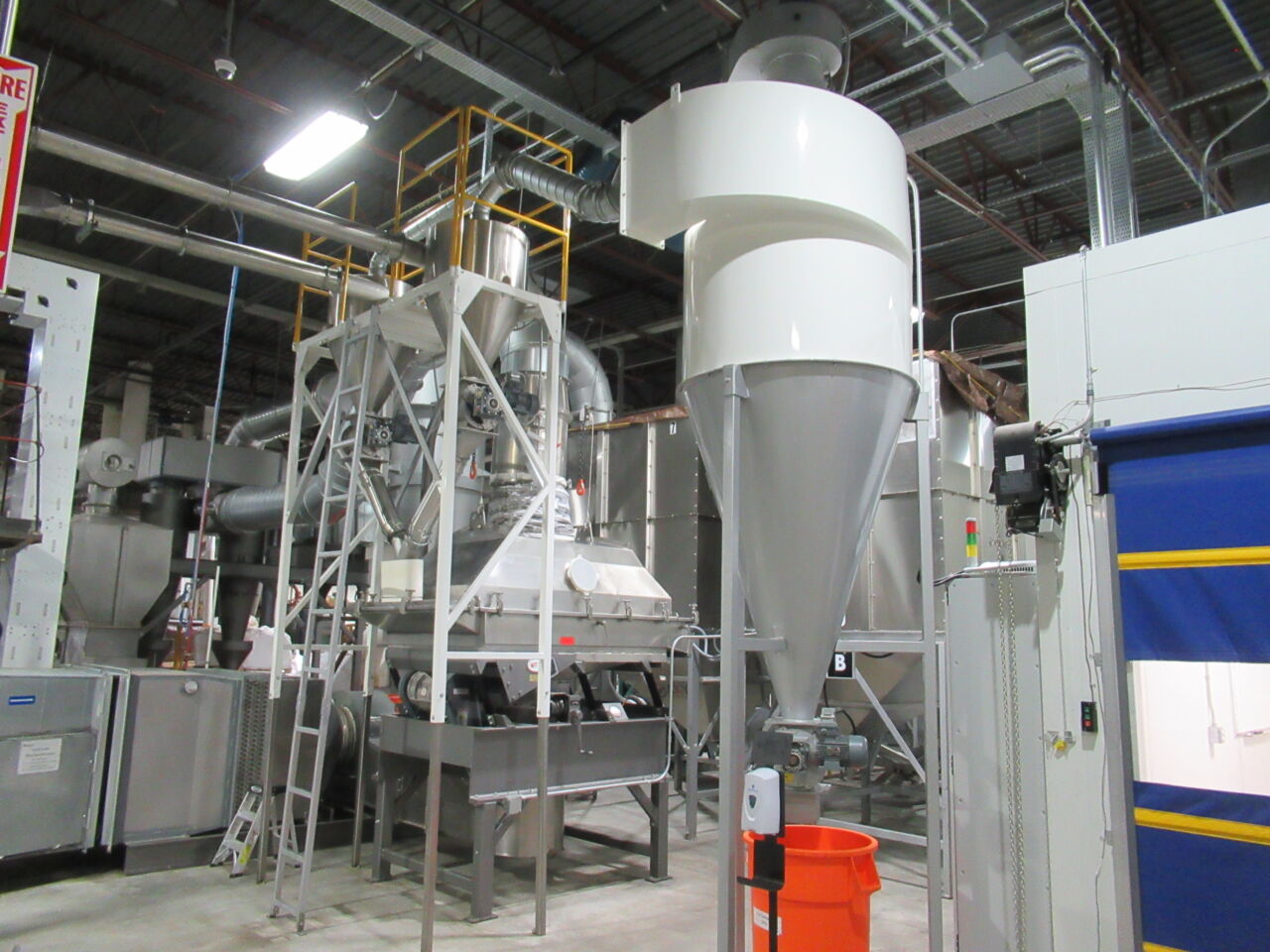
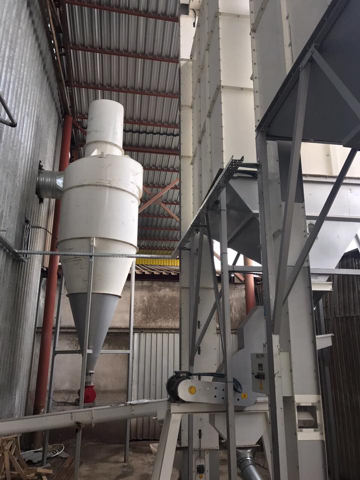
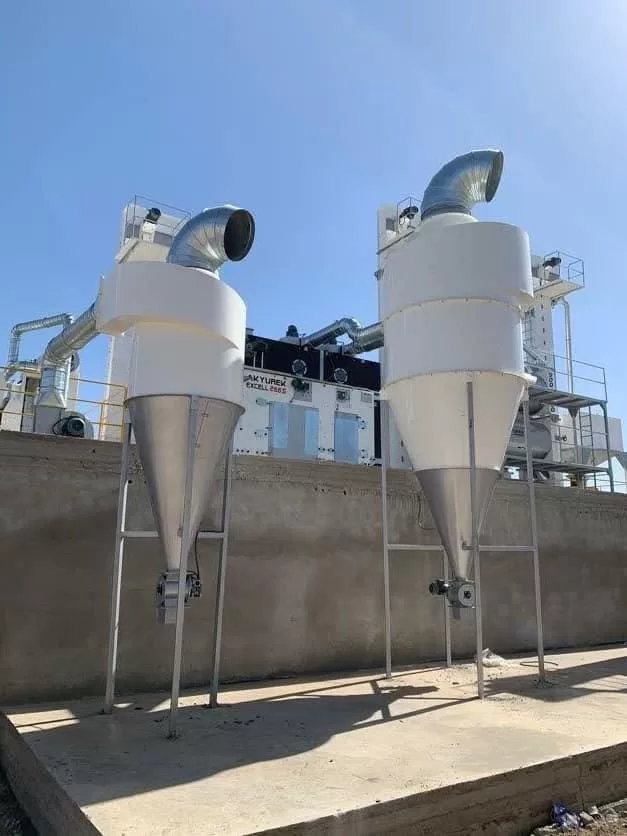
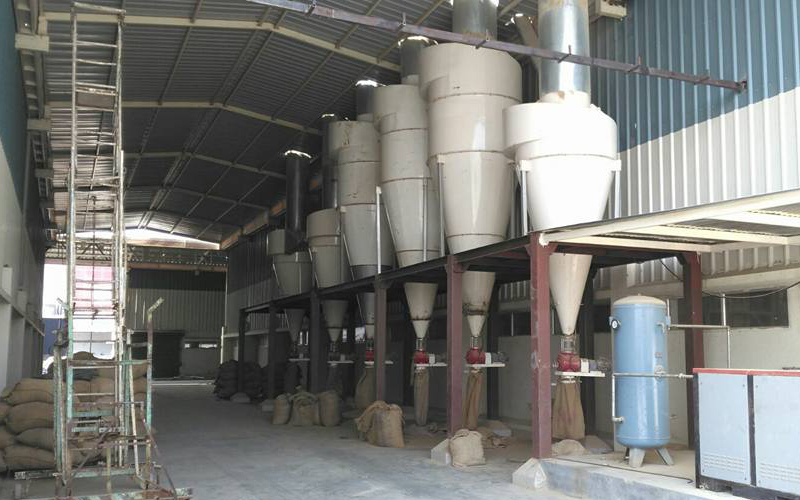
Dust collectors and pulse jet bag filters separate airborne particles from the process air stream. The collected dust falls into the lower hopper, where it must be removed without allowing excessive outside air to enter the collector. Installing a rotary airlock valve beneath the hopper provides a controlled and continuous discharge point.
As the rotor turns, material enters the open rotor pockets at the inlet. The rotor carries the material around the housing and releases it through the outlet. The close relationship between the rotor, housing, end plates, and sealing components helps limit airflow through the valve while permitting dry material to pass.
This controlled operation makes the DCAL-1000 Series suitable for:
- Pulse jet dust collectors
- Bag filter dust collection systems
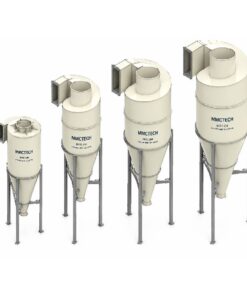
- Cyclone dust separators
- Seed cleaning aspiration systems
- Grain processing dust extraction lines
- Pneumatic conveying systems
- Industrial filtration equipment
- Hopper and silo discharge points
- Light material and waste collection systems
- Dehulling, milling, and polishing lines
Maintains System Air Balance During Material Discharge
Uncontrolled air leakage at the bottom of a dust collector or cyclone can reduce suction performance throughout the system. It may also disturb material flow, increase fan energy demand, and allow dust to accumulate inside the hopper. The MMCTECH DCAL Series helps maintain a more stable pressure boundary between the collector and the downstream discharge equipment.
The valve does not create a perfectly hermetic seal because normal operating clearances are required between rotating and stationary parts. However, when correctly selected and maintained, it substantially restricts air passage compared with an open hopper or uncontrolled discharge connection. Final leakage performance depends on rotor clearances, seal material, operating pressure, particle characteristics, temperature, and equipment condition.
Six-Vane Removable Rotor for Controlled Material Flow
The standard configuration uses a removable six-vane cellular rotor. Each rotor pocket receives a measured volume of material and transports it from the inlet to the outlet as the shaft rotates. This creates a steady discharge pattern that helps prevent sudden material dumping and supports consistent downstream handling.
The nominal displacement is approximately 0.14 cu ft per revolution (4 liters per revolution). At the specified operating speed, the unit can provide a nominal volumetric capacity of up to approximately 353.1 cu ft/hour (10 m³/hour). Actual material throughput depends on bulk density, pocket filling efficiency, rotor speed, moisture, particle size, product flowability, and pressure differential.
DCAL-1000 Industrial Metal Rotary Airlock
The DCAL-1000 is the standard industrial version developed for dust, fine particles, seed processing waste, grain dust, husks, chaff, and other suitable dry materials. Its robust metal construction is appropriate for general industrial dust collection, cyclone discharge, filtration, and low-pressure pneumatic conveying applications.
The compact design allows the valve to be positioned directly below a collector hopper, cyclone, storage bin, or process discharge. Custom inlet transitions, outlet transitions, flange patterns, and installation connections may be engineered according to the existing system or new plant layout.
DCAL-1100 Stainless Steel/Chrome Rotary Airlock
The DCAL-1100 provides a stainless steel/chrome construction option for hygienic and corrosion-sensitive applications. It is suitable for facilities processing food ingredients, cleaned seeds, grains, pulses, spices, specialty crops, and other materials where contact-surface cleanliness is an important consideration.
Stainless steel construction can provide easier cleaning and improved resistance to moisture and corrosion compared with standard industrial metal construction. The final material grade, surface finish, rotor configuration, seal type, motor, gearbox, and cleanability requirements are determined according to the processed material and project specification.
Integration with MMCTECH Seed Processing Equipment
The DCAL-1000 Series can be integrated into complete MMCTECH processing plants and individual dust control systems serving:
- Seed pre-cleaner machines
- Fine screen seed cleaners
- Super fine screen cleaners
- Seed graders and sizing machines
- Gravity separator machines
- Destoners and stone separators
- Air recycling aspirators
- Zig zag air separators
- De-awners and brush machines
- Seed polishing systems
- Dehulling and milling equipment
- Conveyors and bucket elevators
- Bagging and packaging systems
- Silos, bins, and collection hoppers
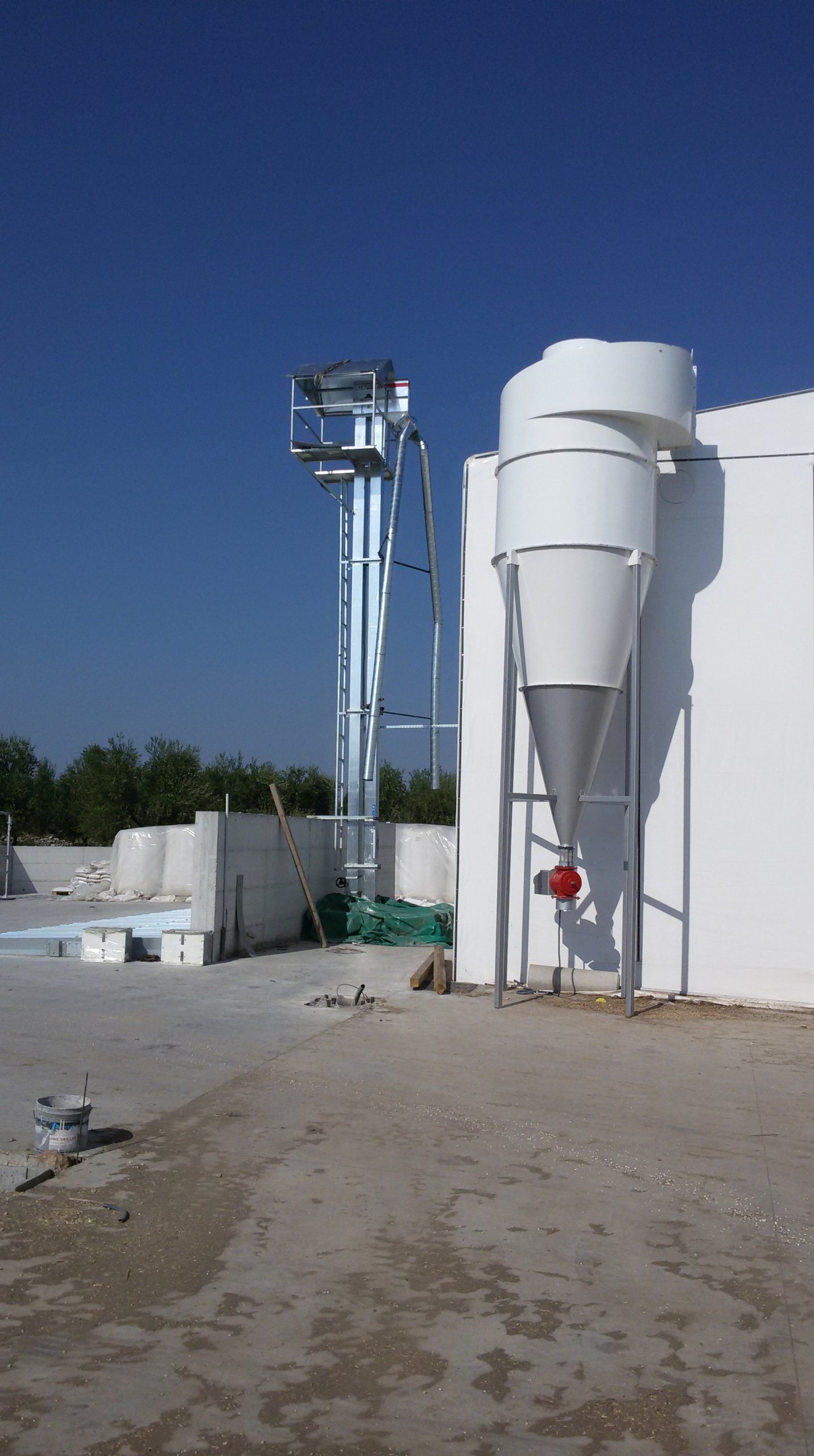
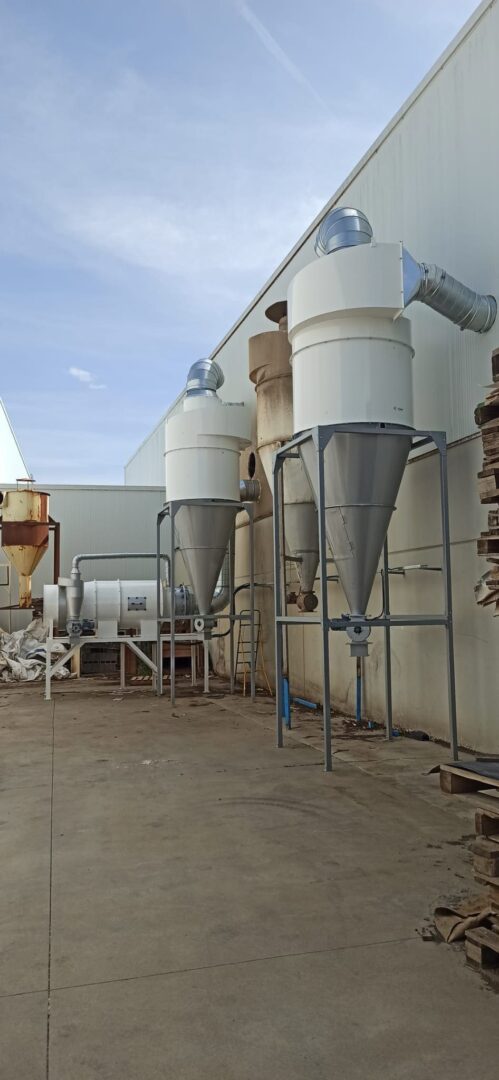
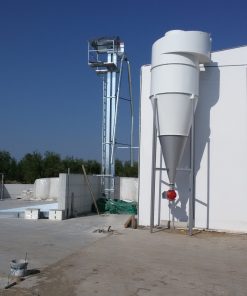
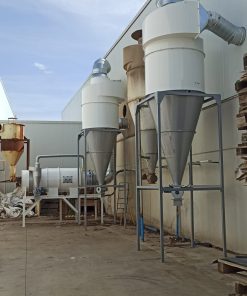
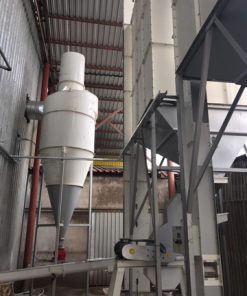
Typical installation locations include the discharge of a cyclone, beneath a pulse jet dust collector, between a hopper and screw conveyor, or at the feeding point of a suitable pneumatic conveying line. MMCTECH evaluates the system pressure, material characteristics, expected throughput, flange dimensions, and downstream equipment before confirming the final valve configuration.
Compact Gearmotor Drive for Continuous Operation
The standard valve is driven by an approximately 0.5 HP (0.37 kW) electric motor and industrial gearbox. The drive reduces the motor speed from approximately 1400 RPM to a rotor speed of approximately 40 RPM. This low-speed operation provides controlled material discharge while limiting unnecessary product impact and mechanical wear.
The valve can be configured for 208 / 240 / 480 / 600 VAC – 3 Phase – 50/60 Hz electrical systems according to the installation location. Motor protection, starter components, local controls, sensors, and automation interfaces can be incorporated into MMCTECH control panels.
Standard Nitrile Wipers and Optional High-Temperature Seals
Standard configurations may use nitrile rubber, also known as Buna-N, wipers for general industrial service. The specified working range for the standard wiper material is approximately -20°F to 170°F (-29°C to 77°C).
Optional high-temperature sealing materials may be selected for applications outside the standard temperature range. Seal compatibility must be evaluated according to process temperature, material chemistry, food-contact requirements, abrasion, pressure differential, and cleaning method.
Applications Across Agricultural and Industrial Facilities
MMCTECH rotary airlock valves can be used in facilities handling dry, free-flowing powders and lightweight particulate materials, including:
- Seed and grain dust
- Fine agricultural particles
- Husks, shells, and chaff
- Flour and milling by-products
- Feed ingredients
- Food-processing powders
- Biomass dust
- Filter fines
- Cyclone-separated material
- Suitable non-abrasive industrial powders
Material suitability must be confirmed before ordering. Highly abrasive, sticky, fibrous, corrosive, heat-sensitive, or hazardous powders may require specialized clearances, rotor designs, coatings, seals, drive systems, or construction materials.
How to Select the Best Rotary Airlock Valve
The best rotary airlock valve is selected according to the complete process rather than inlet size alone. Important selection factors include:
- Required material throughput
- Material bulk density
- Particle size and shape
- Moisture and flowability
- Operating temperature
- Pressure or vacuum differential
- Required rotor speed
- Dust collector or cyclone outlet dimensions
- Downstream conveyor or container
- Construction material
- Seal and wiper compatibility
- Electrical voltage and frequency
- Cleaning and hygiene requirements
- Plant automation requirements
An incorrectly sized valve may cause bridging, material backup, excessive air leakage, rotor jamming, product damage, or insufficient discharge capacity. MMCTECH provides engineering support to match the DCAL configuration to the dust collector, cyclone, filtration system, or pneumatic conveying application.
Rotary Airlocks and Combustible Dust Safety
A standard rotary airlock supports controlled material discharge, but it should not automatically be considered a certified explosion-isolation device. Facilities handling combustible dust must complete an application-specific hazard assessment and follow the applicable fire, electrical, ventilation, and combustible-dust requirements for the installation location.
Required safety features may include explosion venting, suppression, isolation equipment, grounding, monitoring, spark detection, specialized clearances, or certified components. These requirements must be determined by the project engineering team and the applicable authority having jurisdiction.
Rotary Airlock Valve for Sale from MMCTECH
MMCTECH manufactures DCAL Series rotary airlocks for standalone dust discharge requirements and complete seed processing, grain cleaning, dust collection, filtration, and pneumatic conveying projects. Industrial metal and stainless steel/chrome configurations are available according to the processed material and operating environment.
Companies searching for a rotary airlock valve for a dust collector, a dust collector rotary valve, or an industrial filtration airlock for sale can contact MMCTECH for model selection, installation support, current pricing, and a project-specific quotation.